Please Choose Your Language

Views: 241 Author: Leonard Kzao Publish Time: 2026-09-23 Origin: Leonard Kzao


Content Menu
● Why Cable Selection Matters in EAF Secondary Circuits
● Water-Cooled Cable vs High-Power Cable: Core Differences
● When a Water-Cooled Cable Is the Better Choice
>> 1. Moving Electrode Arms and Furnace Roof Systems
>> 2. High-Current and High-Duty-Cycle Furnaces
>> 3. Space-Constrained Installations
>> 4. Equipment Upgrade and Power-Uprating Projects
● When a High-Power Cable May Be Suitable
● How Xi'an Starmet Selects an EAF Water-Cooled Cable
>> Step 1: Confirm Actual Electrical Duty
>> Step 2: Map the Mechanical Movement Envelope
>> Step 3: Design the Cooling-Water System as Part of the Cable System
>> Step 4: Match Terminal Geometry and Contact Quality
● Common Failure Modes and What They Reveal
● Practical Maintenance Plan for Water-Cooled EAF Cables
>> Semiannual and Annual Checks
● Expert Insight: Total Cost of Ownership Is More Important Than Purchase Price
● Choose Xi'an Starmet for Your EAF Cable Solution
● FAQ
>> 1. What is the main difference between a water-cooled cable and a high-power cable for an EAF?
>> 2. Can a conventional high-power cable replace a water-cooled EAF cable?
>> 3. How often should EAF water-cooled cables be inspected?
>> 4. What are early signs of water-cooled cable failure?
>> 5. Why does cooling-water quality matter for EAF cable life?
>> 6. What information is needed to specify a replacement water-cooled cable?
>> 7. Can Xi'an Starmet provide customized EAF cable solutions?
For an electric arc furnace (EAF), selecting between a water-cooled cable and a conventional high-power cable is not simply a purchasing decision. It is a secondary-circuit engineering decision that affects furnace availability, electrical losses, electrode-arm mobility, operator safety, and total maintenance cost.
At Xi'an Starmet Equipment Co., Ltd., we support steel, ferroalloy, and non-ferrous metal producers with metallurgical engineering, furnace equipment, manufacturing coordination, project delivery, equipment upgrades, and spare parts. From our engineering perspective, water-cooled flexible power cables are normally the right solution where an EAF, ladle furnace (LF), submerged arc furnace (SAF), or similar high-current furnace requires continuous movement at the electrode system. A standard high-power cable may be suitable in fixed or less demanding electrical connections, but it cannot automatically replace an EAF water-cooled cable in a moving, high-current secondary circuit.
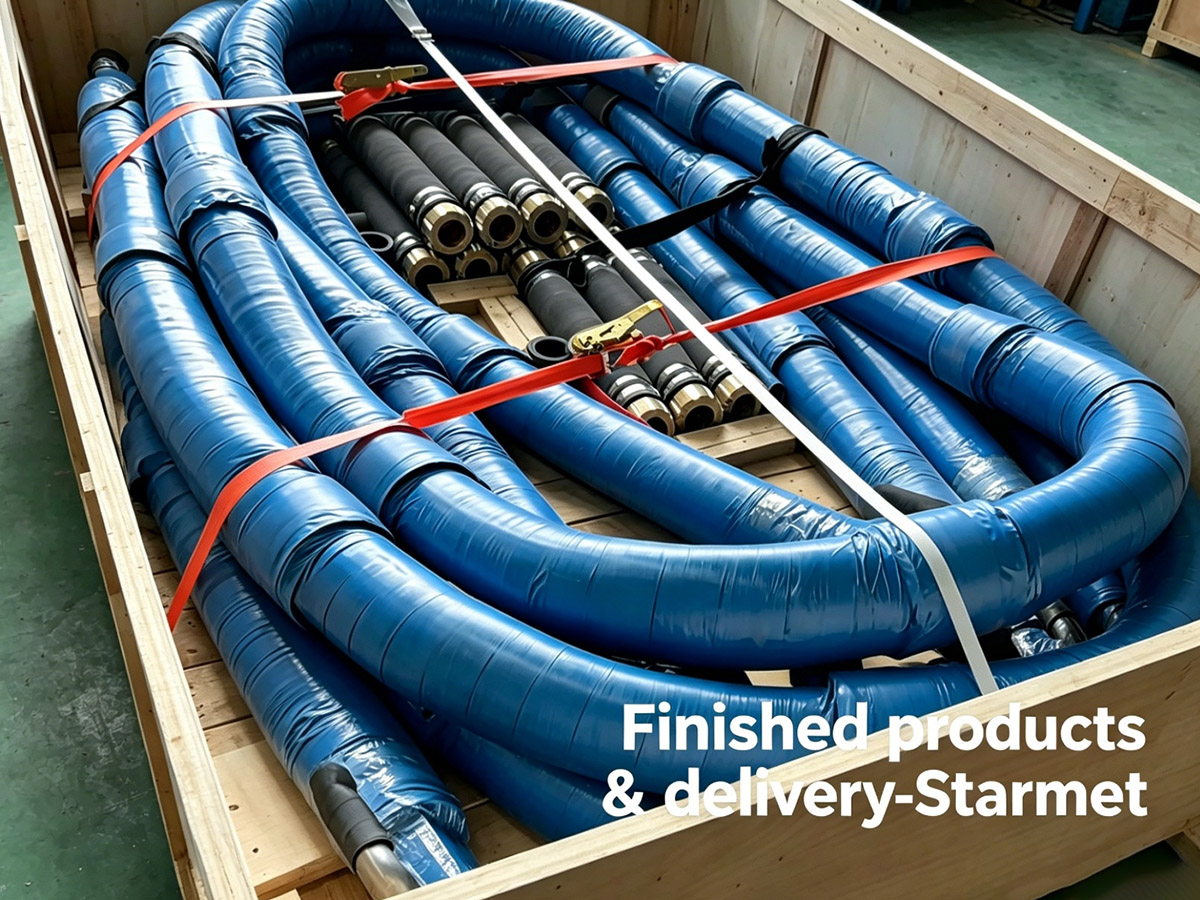
An electric arc furnace operates with extremely high currents and relatively low secondary voltages. The electrical path from the furnace transformer to the electrode system must carry those currents with minimal resistance while remaining mechanically flexible during electrode lifting, lowering, roof movement, and furnace charging.
In practical EAF design, flexible water-cooled cables are commonly installed between fixed electrical components and moving electrode arms. Their purpose is not only to conduct electricity. They must also:
- Carry high secondary current safely
- Reduce resistive heating and voltage drop
- Maintain flexibility throughout repeated furnace movements
- Withstand radiant heat, dust, vibration, slag splash risk, and mechanical abrasion
- Maintain stable cooling-water flow
- Avoid hot spots at terminals and conductor bundles
- Support consistent furnace power input and melting performance
Industry guidance describes water-cooled cables as the flexible section of the furnace secondary electrical system, allowing electrode raising, lowering, and swinging. It also notes that furnaces may use two to four cables per phase, depending on the design and current requirement.
A cable selection error can result in more than an isolated equipment failure. It can lead to unscheduled downtime, water leakage, terminal overheating, conductor damage, reduced transformer-to-arc efficiency, unsafe working conditions, and loss of production.
The terms "water-cooled cable" and "high-power cable" are sometimes used interchangeably. In EAF engineering, however, they describe different cable concepts.
A water-cooled cable is a specialized flexible high-current conductor. It normally uses multiple copper strands or copper rope conductors, copper terminals, an internal cooling-water path, and a reinforced external hose or protective jacket. Cooling water removes \(I^2R\) heat generated in the cable conductors.
A high-power cable, by comparison, is a broader term. It can describe a conventional air-cooled power cable, a heavy industrial cable, a busbar connection, or a specially engineered high-current cable. Not every high-power cable is designed to carry EAF secondary current while bending repeatedly and operating beside an electric arc furnace.
| Selection factor | Water-cooled cable for EAF | Conventional high-power cable |
|---|---|---|
| Typical installation | Moving EAF/LF/SAF secondary circuits | Fixed industrial power distribution or less-mobile connections |
| Cooling method | Internal circulating water | Usually air cooling or passive heat dissipation |
| Current capability | Designed for very high-current furnace duty | Varies widely; may be inadequate for furnace secondary duty |
| Mechanical flexibility | Designed for repeated movement and bending | Often limited, especially at large conductor sizes |
| Heat control | Active removal of conductor heat | Depends on insulation, conductor area, and ambient cooling |
| Resistance stability | Can be optimized for low resistance under continuous heavy load | May rise in temperature and resistance under extreme current |
| Water-system dependency | Requires monitored, reliable cooling-water supply | No water circuit required |
| Main failure risks | Leaks, blocked flow, hose wear, terminal stress, conductor burnout | Overheating, insulation breakdown, stiffness, cracking, inadequate ampacity |
| Best use case | Electrode arms and other moving furnace connections | Fixed feeders, upstream power systems, or properly engineered static connections |
The key conclusion is straightforward: high power does not automatically mean EAF-ready. An EAF secondary cable must be evaluated for ampacity, thermal performance, cooling-water design, terminal interface, flexibility, bending radius, movement cycles, and site-specific installation conditions.
Water-cooled cable systems are generally the preferred solution when the electrical connection must remain flexible under continuous movement and severe thermal loading.
Electrode arms move constantly during melting and refining. The flexible cable must follow that motion without kinking, excessive twisting, abrasion, or conductor fatigue.
Industry technical guidance identifies water-cooled cables as the flexible connection between fixed secondary components and moving electrode systems. For this reason, a standard heavy-duty electrical cable that appears sufficiently large on paper may still be unsuitable if it cannot survive the actual motion envelope.
Water cooling becomes increasingly important as furnace current, operating intensity, and thermal exposure rise. Active cooling helps remove heat from the conductor bundle and can help maintain a more stable operating temperature.
For EAF service, one industry reference suggests a maximum current density of approximately 4.5 A/mm² for water-cooled cable applications, while ladle furnace applications may use approximately 5.5 A/mm², subject to the specific cooling and operating conditions. These values should be treated as engineering reference points rather than universal selection rules.
A water-cooled conductor may allow a compact high-current cable design compared with an oversized air-cooled alternative. This can be valuable where cable routing, furnace layout, electrode-arm clearance, or maintenance access is limited.
When a plant increases transformer capacity, expands furnace power input, shortens tap-to-tap time, or changes operating practices, the existing cable system must be reassessed. An existing high-power cable may become a bottleneck because of increased current density, elevated temperature, higher voltage drop, or reduced mechanical life.
At Xi'an Starmet, we recommend reviewing the complete secondary circuit during any furnace power upgrade—not just the transformer rating. The review should include cables, terminals, bus tubes, current-conducting arms, electrode holders, cooling-water circuits, and cable support geometry.
A conventional high-power cable may still be appropriate in certain applications. The correct decision depends on the specific location in the electrical system.
High-power cable can be a reasonable option when:
- The connection is fixed and does not experience frequent bending
- Current levels are within the cable's verified continuous rating
- Ambient temperature and radiant-heat exposure are controlled
- Adequate air circulation is available
- Installation space permits the required conductor cross-section
- The cable insulation system is compatible with electrical, thermal, and chemical conditions
- No cooling-water circuit is preferred or available
- The cable is installed upstream of the furnace transformer rather than in the high-current moving secondary circuit
For example, a plant may use conventional high-voltage or medium-voltage cables on the transformer primary side, while using water-cooled flexible cables on the low-voltage, high-current secondary side. These are different operating environments and should not be evaluated using the same selection criteria.
At Xi'an Starmet Equipment Co., Ltd., we do not recommend selecting a water-cooled cable only by its outside diameter, approximate current rating, or price. A reliable cable package starts with process and equipment data.
The first requirement is the furnace's real operating current, not only the transformer nameplate value. The engineering team should assess:
- Transformer secondary voltage and current
- Actual RMS current during operation
- Peak current conditions
- Furnace power rating
- Number of cables per phase
- Operating duty cycle
- Arc stability and furnace control practice
- Future capacity-expansion plans
Actual operating records are especially valuable. A cable selected only from design values may be undersized if the furnace has been uprated or if its operating practice has changed.
The cable must move safely throughout the entire electrode travel range. Important checks include:
- Required cable length
- Minimum bend radius
- Electrode lift and lowering distance
- Arm swing movement
- Roof swing or charging movement
- Cable routing and support points
- Pinch points and abrasion zones
- Clearance from hot surfaces and slag-risk areas
One technical reference indicates that the cable's minimum bending radius is typically around five to six times the inner diameter of the water hose, although the final value must follow the cable supplier's design requirements.
A water-cooled cable is not an isolated component. It is part of a cooling-water circuit. Cable performance depends on stable flow, correct pressure, acceptable inlet-water quality, proper drainage, and reliable leak detection.
Engineering checks should include:
- Inlet and outlet water temperature
- Cooling-water flow rate
- Water pressure
- Water conductivity and treatment quality
- Filter and strainer condition
- Pressure-drop trend
- Hose and connection integrity
- Alarm and interlock logic
Restricted water flow, scale buildup, blocked passages, hose collapse, or leaking connections can quickly create local overheating. Cable condition must therefore be assessed together with water-system performance.
Cable terminals are critical electrical and mechanical interfaces. Poor contact surfaces, incorrect bolt tightening, misalignment, or repeated mechanical stress can increase resistance and create a localized hot spot.
Before replacement or retrofit, Xi'an Starmet recommends verifying:
- Terminal contact-face dimensions
- Bolt pattern and hardware
- Current-carrying contact area
- Alignment with bus tubes or electrode-arm terminals
- Required tightening torque
- Terminal flatness and surface condition
- Cooling-water connection orientation
- Safe access for installation and inspection
A cable with excellent copper conductors can still fail early if its terminal interface is poorly designed or installed.
EAF cable failures often develop gradually. Early detection can prevent a minor defect from becoming a production-stopping event.
| Failure symptom | Likely cause | Recommended action |
|---|---|---|
| Rising voltage drop | Conductor deterioration, loose terminal, increasing resistance | Measure resistance, inspect terminals, compare phase balance |
| High outlet-water temperature | Restricted flow, excessive current density, internal hot spot | Verify flow, clean circuit, review current and cable sizing |
| Coolant leakage | Hose damage, worn cover, clamp or terminal issue | Remove from service, depressurize, inspect and repair or replace |
| External cracks or abrasion | Mechanical rubbing, excessive bending, heat exposure | Correct routing, add protection, assess cable replacement |
| Repeated terminal overheating | Poor contact, insufficient clamping, distorted terminal | Inspect contact surfaces, alignment, bolts, and torque procedure |
| Cable twisting or kinking | Incorrect length, poor support, unsuitable bend radius | Redesign routing and support arrangement |
| Uneven phase performance | Different resistance, cooling conditions, or connection quality | Inspect all phases and rebalance the cable system |
A technical furnace compendium recommends measuring water-cooled cable resistance periodically, at least twice per year. It further notes that replacement may be considered when resistance rises to about 1.5 times the design value.
This is an important lesson for plant managers: visual inspection alone is not enough. A cable may look acceptable externally while internal conductor deterioration, water-path restriction, or terminal resistance is already affecting furnace performance.
A structured maintenance program can extend cable life and reduce unplanned outages. The exact schedule should reflect furnace utilization, cable design, water quality, and operating severity.
- Check for visible water leakage
- Observe cooling-water flow and return temperature
- Look for external rubbing, hose damage, or abnormal cable position
- Confirm cable movement is smooth during electrode travel
- Listen for unusual vibration or contact noise near terminals
- Record any abnormal temperature or electrical trend
- Inspect cable supports, clamps, and protective covers
- Verify connection tightness using approved procedures
- Check for discoloration near terminals
- Review water-flow and pressure trends
- Inspect cable routing for pinch points
- Use infrared thermography under load where safe and available
A steel-plant maintenance guide identifies monthly thermography of secondary busbars and flexible cables under load as a useful practice, with significant temperature rise at a connection indicating a potential loose connection or cable annealing issue.
- Measure conductor resistance and compare phases
- Conduct pressure or leak testing according to site procedure
- Inspect water quality and filtration performance
- Review cooling-water system deposits and scale risk
- Assess terminal wear, deformation, and contact condition
- Review cable life against furnace heats, operating hours, and maintenance history
- Plan replacement before failure if resistance or thermal trends deteriorate
A lower-cost cable may appear attractive during procurement, but furnace operators should evaluate the total cost of ownership.
A cable that fails prematurely can create costs far beyond the spare part itself:
- Lost furnace production
- Emergency labor and crane time
- Safety exposure during rushed maintenance
- Secondary damage to terminals or bus systems
- Reduced furnace power input
- Higher energy consumption from increased resistance
- Delayed customer deliveries
- Increased spare inventory consumption
The most economical EAF cable solution is usually not the lowest initial price. It is the cable system that provides stable current delivery, dependable cooling, repeatable movement, safe installation, and predictable replacement planning.
Replacing aged, high-resistance water-cooled cables can also have an energy-efficiency benefit. One EAF compendium estimates average energy savings of approximately 0.15% from replacing old high-resistance water-cooled cables with lower-resistance new cables. The actual benefit will depend on furnace size, cable condition, operating hours, and the entire secondary-circuit configuration.
Xi'an Starmet Equipment Co., Ltd. helps customers evaluate the full furnace application rather than treating cable selection as a standalone spare-parts purchase. We can support new furnace projects, EAF modernization, LF and SAF upgrades, cable replacement planning, equipment supply, manufacturing coordination, and metallurgical spare-parts services.
For water-cooled cable vs high-power cable decisions, our engineering approach considers your actual furnace current, transformer data, movement geometry, cable length, cooling-water conditions, terminal configuration, plant maintenance capability, and production objectives.
Contact Xi'an Starmet Equipment Co., Ltd. to discuss your electric arc furnace cable requirements and receive a customized engineering solution for safer, more reliable, and more efficient furnace operation.
A water-cooled cable is a specialized high-current flexible cable with circulating cooling water. It is designed for demanding secondary-circuit applications where the cable must carry high current and move with electrode arms. A high-power cable is a broader category and may not have the cooling capacity, flexibility, or mechanical durability required for EAF secondary service.
Usually, not in a moving high-current secondary connection. A conventional cable may overheat, become too stiff, suffer insulation damage, or fail mechanically if it is not specifically engineered for the furnace's current, temperature, movement, and cooling conditions.
Operators should perform visual and cooling checks daily or per shift, conduct more detailed mechanical and thermal checks monthly, and measure electrical resistance periodically. Industry guidance recommends resistance measurement at least twice a year.
Common warning signs include coolant leakage, increased outlet-water temperature, abnormal voltage drop, unequal phase behavior, terminal discoloration, cracks in the outer hose, cable kinking, rising electrical resistance, and repeated overheating at connections.
Poor water quality can contribute to deposits, flow restriction, corrosion risk, and reduced heat removal. Stable water flow and suitable water treatment help prevent internal overheating and improve cable reliability.
Key data include furnace type, transformer rating, secondary current and voltage, number of cables per phase, cable length, terminal drawings, electrode movement range, bend-radius limitations, cooling-water flow and pressure, water quality, and operating duty cycle.
Yes. Xi'an Starmet can support customized engineering for EAF, LF, SAF, ferroalloy, and non-ferrous metallurgical applications, including cable selection, terminal coordination, equipment upgrade planning, spare-parts supply, and project delivery support.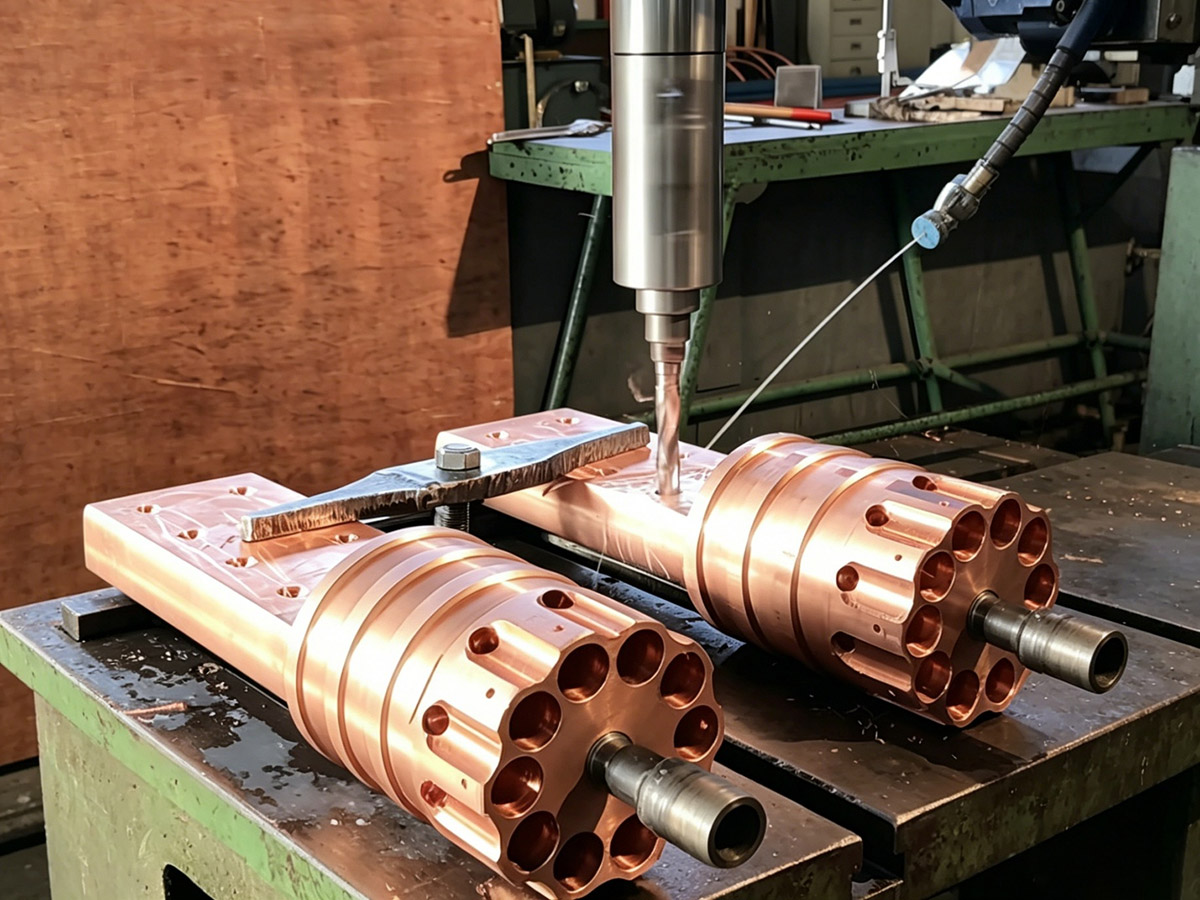
1. [Furukawa Electric — Water Cooled Cable for Electric Furnace]
2. [S&A Busbar — Water-Cooled Cables and Flexibles]
3. [SAMEEEKSHA — Electric Arc Furnace Compendium]
4. [I²R Power — Engineering FAQs on Water-Cooled Power Cables]
5. [Watteredge — Large Water-Cooled Cables]
6. [Watteredge — Water-Cooled Cable Reconditioning, Repair and Rebuilding]
7. [Power Quality Blog — Power Quality and Electrical Arc Furnaces]
8. [Oxmaint — Electric Arc Furnace Maintenance Guide for Steel Plants]
Hot Tags: China, Global, OEM, private label, manufacturers, factory, suppliers, manufacturing company


