Please Choose Your Language

Views: 260 Author: Xi’an Starmet Publish Time: 2026-09-30 Origin: Site


Content Menu
● Why This Decision Matters in Furnace Power Systems
● Water-Cooled Cable vs Copper Busbar: Core Comparison
● When Water-Cooled Cables Are the Better Choice
>> Select Water-Cooled Cable When Movement Is Required
>> Key Advantages of Water-Cooled Cables
>> Limits and Risks to Control
● When Copper Busbars Are the Better Choice
>> Select Copper Busbar for Fixed Current Paths
>> Key Advantages of Copper Busbars
>> Limits and Risks to Control
● The Best Answer: A Hybrid Furnace Short Network
>> Expert Design Insight: Copper Area Alone Is Not Enough
● A Practical Selection Checklist
● Installation and Maintenance Practices That Protect Uptime
● Xi'an Starmet's Engineering Approach
● FAQ
>> 1. Can a copper busbar replace a water-cooled cable in an electric arc furnace?
>> 2. Why are water-cooled cables used in furnace secondary circuits?
>> 3. How can a plant reduce water-cooled cable failures?
>> 4. What causes copper busbar hot spots?
>> 5. Is a water-cooled cable always more efficient than a copper busbar?
>> 6. What information is needed to size a furnace water-cooled cable?
>> 7. Can Xi'an Starmet support an existing furnace upgrade?
For high-current furnace power transfer, the question is rarely water-cooled cable vs copper busbar as an absolute choice. The most reliable furnace short-network designs use both in the right locations: rigid copper busbars for fixed, low-impedance current paths and flexible water-cooled cables where electrodes, furnace vessels, roofs, or arms must move.
At Xi'an Starmet Equipment Co., Ltd., we help steel, ferroalloy, and non-ferrous metal producers engineer complete high-current power-transfer systems for electric arc furnaces (EAF), submerged arc furnaces (SAF), ladle furnaces (LF), refining furnaces, and associated metallurgical equipment. Our approach starts with the actual furnace duty cycle, transformer parameters, mechanical movements, thermal environment, cooling-water capability, and maintenance conditions—not with a one-size-fits-all product selection.
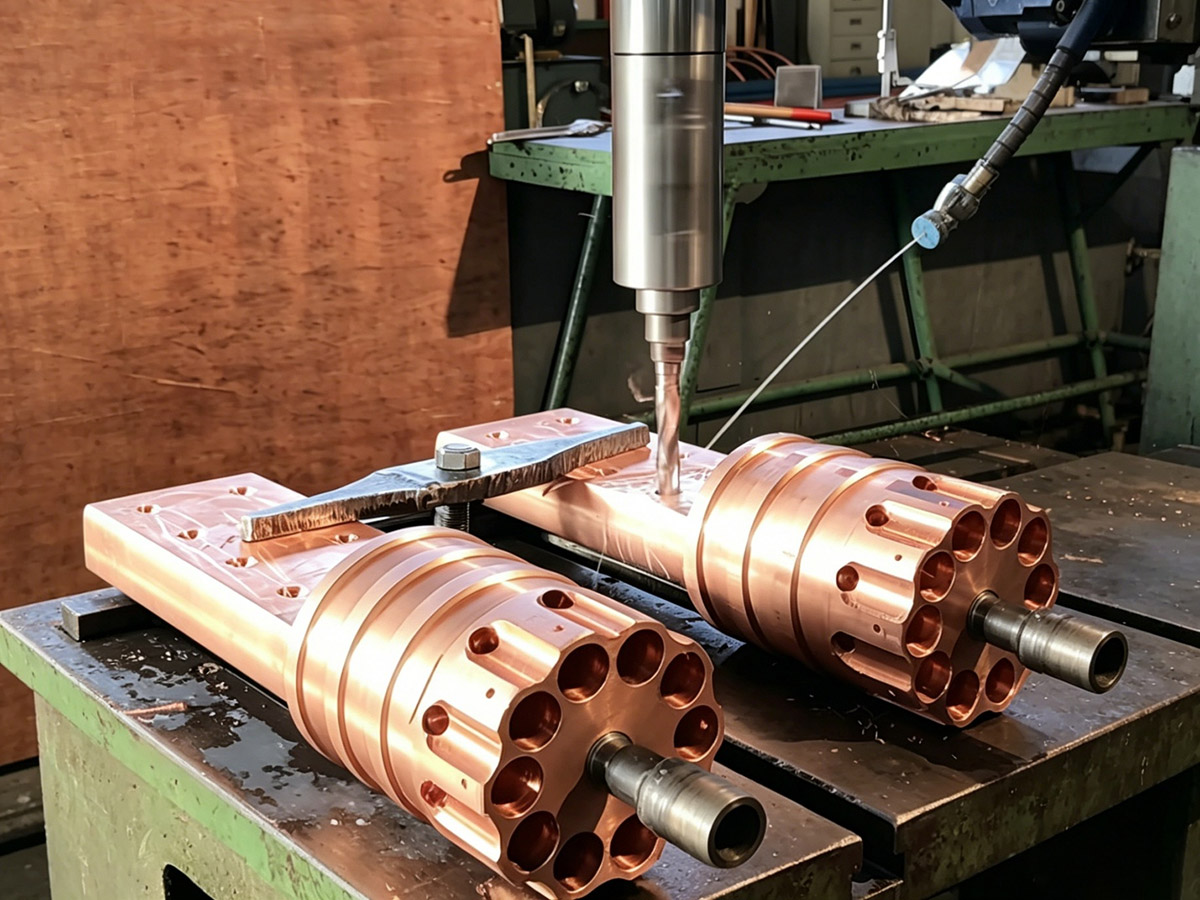
The secondary circuit between a furnace transformer and the electrodes must carry extremely high current while controlling heat, impedance, electromagnetic forces, mechanical stress, and electrical safety. In an EAF, LF, or SAF, a poor conductor arrangement can increase electrical loss, create local overheating, accelerate terminal damage, raise maintenance frequency, and reduce operating stability.
A typical furnace short network includes:
- Transformer secondary terminals
- Fixed copper busbars or copper plates
- Water-cooled copper tubes or busbars
- Flexible water-cooled cables
- Electrode arms, contact shoes, and conductive components
- Insulation, supports, cooling-water circuits, and monitoring devices
The key engineering principle is simple: keep the current path short, balanced, well-cooled, mechanically secure, and appropriate for movement. Shorter, properly arranged high-current paths generally reduce impedance and associated power losses, while water-cooled flexible conductors enable the movement required for electrode lifting, furnace tilting, and roof rotation.
Water-cooled cables and copper busbars serve different engineering functions. Selecting one without considering the other can lead to unnecessary cost, excessive resistance, restricted mechanical movement, or avoidable maintenance risks.
| Selection factor | Water-cooled cable | Copper busbar |
|---|---|---|
| Primary role | Flexible connection for moving equipment | Rigid connection in fixed geometry |
| Typical furnace location | Between fixed transformer-side conductors and moving electrode arms or furnace structures | Transformer outlet, fixed short-network runs, stationary interconnections |
| Mechanical flexibility | Very high | Low to none |
| Cooling method | Internal water cooling removes resistive and radiant heat | Natural air cooling, forced cooling, or internal water cooling depending on design |
| Installation space | Useful in constrained or moving areas | Best for stable, accessible routes |
| Electrical performance | Can deliver high current but must be sized and routed carefully to control impedance | Excellent for short, rigid, low-resistance current paths |
| Main failure risks | Hose wear, leakage, strand fatigue, terminal overheating, blocked cooling path | Loose joints, oxidation, thermal expansion stress, inadequate insulation, overheating |
| Maintenance focus | Water quality, flow, pressure, hose condition, bend radius, terminals | Bolt torque, joint condition, insulation clearance, thermal scanning, support integrity |
| Best application | Furnace tilt, roof swing, electrode travel, movable electrode-arm connections | Fixed transformer-to-furnace connections and stationary high-current distribution |
A well-designed system is therefore usually a hybrid solution. Copper busbars handle stable portions of the current route, while water-cooled cables bridge the sections that must flex or move.
A water-cooled cable is a flexible, high-current conductor generally made from multiple copper strands connected to machined copper terminals and protected by a robust hose assembly. Cooling water removes heat generated by conductor resistance and exposure to furnace radiation. These cables are commonly used in the flexible sections of EAF, LF, SAF, induction-furnace, and other metallurgical power circuits.
Water-cooled cables are the preferred solution when the electrical connection must accommodate:
- Electrode lifting and lowering
- Furnace-body tilting during tapping
- Furnace-roof opening or rotation
- Electrode-arm travel
- Thermal expansion and controlled mechanical displacement
- Equipment layouts where a rigid conductor would be overstressed
In practical EAF systems, water-cooled cables are commonly the flexible portion of the secondary electrical circuit that permits electrode movement. Their cable length must allow the required motion, but should not be unnecessarily long because excessive length can increase short-network impedance.
High flexibility: A flexible cable protects the power circuit from mechanical stress as equipment moves. This is essential near electrode arms, furnace roofs, and tilting mechanisms.
Effective heat removal: Internal cooling continuously removes Joule heat. This supports high current density compared with an uncooled flexible conductor, provided the conductor cross-section, water flow, and temperature rise are engineered correctly.
Compact routing: Cables can often be routed through tighter spaces than rigid busbars. This can simplify furnace modernization projects where transformer locations, columns, hydraulic equipment, and existing structures limit available space.
Reduced mechanical load on moving components: A properly designed cable assembly can reduce stress transferred to terminals, electrodes, and moving structures compared with an inflexible conductor arrangement.
Water-cooled cables are not maintenance-free. The cooling circuit is part of the electrical system, so a leak, blockage, poor water quality, excessive bend, or damaged hose can become a production and safety issue.
The most important controls include:
- Continuous monitoring of cooling-water flow and pressure
- Clear alarm and interlock logic for loss of cooling
- Suitable water treatment to limit scale, corrosion, and contamination
- Correct minimum bend radius and cable length
- Heat-resistant, abrasion-resistant outer hose selection
- Proper terminal clamping, contact preparation, and torque control
- Periodic infrared inspection to identify high-resistance joints
Industry guidance emphasizes that cooling continuity, water quality, connection integrity, and mechanical condition all directly influence the service life of water-cooled cables. Electrical installations must also protect live components from accidental contact and account for environmental conditions such as heat, liquids, vapors, and damaging contaminants.
Copper busbars are rigid conductors used to transfer large current through fixed equipment sections. They may take the form of flat copper bars, laminated plates, tubular conductors, or water-cooled copper busbars. In high-current furnace systems, busbars are especially effective where the conductor route is stable and where minimizing electrical resistance and impedance is critical.
Copper busbars are generally the better choice when:
- The equipment connection is stationary
- The conductor route can be short and direct
- There is no furnace tilt, roof rotation, or electrode movement at that point
- The area allows reliable mechanical supports and insulation clearances
- The priority is a robust, low-resistance, long-life fixed conductor
Examples include transformer secondary outlets, fixed delta connections, stationary portions of the furnace short network, and permanent links between electrical components.
Low-resistance, rigid current transfer: Copper busbars provide a direct and stable current path. Their geometry can be designed to reduce unnecessary conductor length and support predictable current sharing among phases.
Long service life: With proper support, insulation, joint design, and maintenance, busbars can provide durable service in a fixed installation.
Clear inspection access: Rigid arrangements can make it easier to inspect supports, joints, insulation, and clearances—provided the system is designed with maintenance access from the beginning.
Custom geometry: Busbars can be fabricated as flat bars, laminated assemblies, or hollow water-cooled sections to fit the available space and electrical design requirements. Water-cooled busbars may also reduce the copper cross-section required compared with air-cooled designs in suitable applications.
The main limitation is obvious: a conventional rigid busbar cannot safely absorb repeated motion. Using a rigid bar where a flexible element is required may transfer force into terminals, insulators, copper joints, or moving furnace components.
Copper busbars also require careful engineering for:
- Electrodynamic force during high-current and short-circuit events
- Thermal expansion and contraction
- Phase-to-phase spacing and insulation coordination
- Joint flatness, contact pressure, and oxidation control
- Balanced conductor geometry to avoid unequal phase impedance
- Safe access, guarding, and prevention of accidental contact
High furnace current creates strong electrodynamic forces between conductors. Accordingly, material selection, mechanical support, conductor spacing, and insulation cannot be treated as secondary details.
For most high-current metallurgical furnaces, the strongest design is not a choice between two competing technologies. It is a coordinated system:
1. Use copper busbars for stationary, short, accessible sections.
2. Use water-cooled busbars or tubes where fixed sections face high thermal loading.
3. Use water-cooled cables only where flexibility is needed.
4. Keep flexible cable runs as short as the required mechanical movement permits.
5. Design all phases together to control resistance, reactance, current balance, and physical clearance.
At Xi'an Starmet, we assess the complete electrical and mechanical path before recommending a configuration. This includes furnace type, transformer rating, secondary voltage, operating current, conductor arrangement, movement envelope, cooling-water quality, ambient temperature, dust level, and service-access requirements.
A common procurement mistake is selecting a conductor only by copper cross-section or nominal current rating. In furnace service, this is incomplete.
A reliable design must consider:
- RMS and peak current
- Furnace duty cycle and power-on time
- Harmonics and electromagnetic effects
- AC skin and proximity effects
- Current-path length and loop geometry
- Phase balance
- Cooling-water flow, pressure, inlet temperature, and permissible temperature rise
- Mechanical flexing cycles
- Terminal contact resistance
- Exposure to radiant heat, slag, dust, vibration, and abrasion
For example, an oversized flexible cable can still underperform if it is too long, poorly routed, improperly cooled, or installed with high-resistance terminals. Conversely, a robust busbar assembly may suffer hot spots if bolted joints are contaminated, unevenly clamped, or not periodically checked by thermal imaging.
Before deciding between water-cooled cable and copper busbar, collect the following design information.
- Transformer secondary voltage and rated current
- Maximum operating current and short-circuit current
- Furnace type: EAF, LF, SAF, ferroalloy furnace, or non-ferrous furnace
- Number of phases and conductor arrangement
- Target impedance and allowable power loss
- Existing short-network configuration and known hot spots
- Required electrode travel
- Furnace tilting angle
- Roof or shell rotation path
- Cable bending and torsion conditions
- Available installation space
- Support locations and maintenance access
- Ambient temperature and radiant heat exposure
- Cooling-water inlet temperature, flow, pressure, and quality
- Water-treatment capability
- Leak detection and emergency shutdown strategy
- Requirement for heat shields, abrasion protection, or splash protection
- Frequency of planned shutdowns
- Availability of thermal imaging inspections
- Spare cable and terminal strategy
- Site capability for water-system monitoring
- Historical records of leaks, terminal failures, and cable fatigue
The conductor type is only half of the solution. Installation quality and disciplined maintenance determine whether the short network performs reliably.
- Confirm water flow before energizing the furnace.
- Set alarms for low flow, low pressure, abnormal outlet temperature, and leakage.
- Avoid twisting, crushing, or bending cables below the specified minimum radius.
- Use appropriate routing supports to prevent abrasion against furnace structures.
- Inspect hose surfaces, clamps, terminals, and protective covers routinely.
- Use thermal imaging to detect terminal hot spots during normal operating conditions.
- Replace cables based on condition trends, not only after catastrophic failure.
- Ensure contact faces are clean, flat, and protected against oxidation.
- Apply specified bolt torque and recheck it after thermal cycling when required.
- Verify support insulators, fasteners, guards, and phase clearances.
- Inspect joints with infrared thermography under meaningful load.
- Check for discoloration, looseness, deformation, vibration damage, or insulation tracking.
- Maintain clear access for inspection without compromising electrical guarding.
Cooling-water leaks must be treated as a serious condition in any high-current electrical installation. Relevant safety guidance requires suitable equipment protection in wet or deteriorating environments and emphasizes guarding of energized parts against accidental contact.
Xi'an Starmet Equipment Co., Ltd. provides more than standalone furnace components. We support the complete decision process for new projects, revamps, and reliability upgrades across steelmaking, ferroalloy production, and non-ferrous metallurgy.
Our scope can include:
- Furnace and short-network engineering review
- EAF, SAF, LF, refining-furnace, and vacuum-treatment equipment solutions
- Water-cooled cable and copper busbar configuration
- Custom conductor routing and equipment-interface design
- Manufacturing coordination and quality control
- On-site installation guidance and commissioning support
- Upgrade solutions for aging furnace power-transfer systems
- Critical spares planning, including cables, terminals, clamps, copper components, and insulation parts
- Technical support for reliability, maintenance, and operating stability
A power-transfer upgrade should be evaluated as an operational investment, not as a simple replacement purchase. By reducing localized overheating, improving current-path geometry, strengthening cooling reliability, and matching conductor flexibility to actual equipment movement, plants can improve furnace availability and reduce unplanned interventions.
In the debate over water-cooled cable vs copper busbar for high-current furnace power transfer, the correct answer depends on where the conductor sits in the furnace circuit and what that section must do.
Use copper busbars for short, rigid, low-resistance fixed paths. Use water-cooled cables for high-current connections that must move. Where fixed sections face severe thermal loading, consider water-cooled copper conductors. The best-performing furnace systems combine these technologies in a coordinated short-network design.
Contact Xi'an Starmet Equipment Co., Ltd. to discuss your EAF, SAF, LF, ferroalloy, or non-ferrous furnace power-transfer requirements. Our engineering team can evaluate your operating conditions and develop a customized water-cooled cable, copper busbar, short-network, equipment-upgrade, and spare-parts solution designed for reliable long-term furnace operation.
Only where the connection remains fixed. A copper busbar cannot reliably replace a water-cooled cable at locations requiring electrode travel, furnace tilting, or roof movement. A rigid conductor in a moving connection can cause mechanical stress, joint damage, or insulation failure.
They combine high-current transfer with flexibility. Internal cooling removes resistive heat, while the stranded conductor construction allows movement between fixed electrical equipment and moving furnace components such as electrode arms.
Monitor flow, pressure, inlet and outlet temperature, and water quality; prevent abrasion and excessive bending; inspect terminals regularly; perform infrared thermal scans; and maintain a planned replacement strategy for critical cable assemblies.
Common causes include loose or unevenly tightened bolted joints, oxidized contact surfaces, insufficient contact area, poor phase balance, inadequate conductor cross-section, limited cooling, and localized high-resistance connections.
No. A water-cooled cable is advantageous where flexibility and heat removal are required. For a fixed, short, well-supported connection, a properly designed copper busbar often provides the more direct and efficient solution. System-level impedance and connection quality matter more than choosing a product in isolation.
The engineering team needs transformer secondary current and voltage, duty cycle, furnace movement range, cable route and length, allowable voltage drop or impedance, cooling-water conditions, environmental heat exposure, terminal interfaces, and maintenance requirements.
Yes. Xi'an Starmet can support evaluations and upgrade concepts for existing metallurgical furnaces, including conductor-route optimization, water-cooled cable replacement, copper busbar renewal, cooling-system integration, equipment coordination, spare parts, and technical support.
1. Watteredge. "Large Water Cooled Cables." [https://www.watteredge.com/product/industrial-power-cables/large-water-cooled-cables/]
2. SA Busbar. "Water Cooled Cables and Flexibles." [https://www.sabusbar.com/water-cooled-cables-and-flexibles/]
3. Sanrui Furnace. "Electric Arc Furnace Bus Bar System." [https://www.srfurnace.com/electric-arc-furnace-bus-bar-system.html]
4. GECSA Electrolysis. "Water Cooled Solutions." [https://www.gecsaelectrolysis.com/product/water-cooled/]
5. U.S. Occupational Safety and Health Administration. "1910.303 General Requirements." [https://www.osha.gov/laws-regs/regulations/standardnumber/1910/1910.303]
6. U.S. Occupational Safety and Health Administration. "1910.254 Arc Welding and Cutting." [https://www.osha.gov/laws-regs/regulations/standardnumber/1910/1910.254]
7. International Electrotechnical Commission. "IEC 60529: Degrees of Protection Provided by Enclosures (IP Code)." [https://webstore.iec.ch/en/publication/2452]
8. YNMEC. "Water-Cooled Cables for Metallurgical Furnaces." [https://www.furnaceeaf.com/water-cooled-cables-metallurgical-furnaces/]
Hot Tags: China, Global, OEM, private label, manufacturers, factory, suppliers, manufacturing company


