Please Choose Your Language

Views: 269 Author: Xi’an Starmet Publish Time: 2026-10-10 Origin: Site


Content Menu
● Why Furnace Heat Is More Than an Ambient-Temperature Problem
>> External Radiation and Internal Heating Act Together
>> Furnace Temperature Is Not Cable Temperature
● How Water-Cooled Furnace Cables Manage High-Current Duty
● When Conventional Cable Remains the Appropriate Choice
● Seven Checks Before Selecting a Furnace Cable
>> 1. Establish Actual Electrical Duty
>> 3. Verify the Cooling System
>> 4. Review Movement and Bend Radius
>> 5. Confirm Terminal Compatibility
>> 6. Define Acceptance Testing
>> 7. Plan Replacement and Spare Parts
● A Better Maintenance Strategy: Track Trends, Not Appearance Alone
● Troubleshooting Example: A Replacement Cable That Still Overheats
● Compare Lifecycle Cost, Not Purchase Price Alone
● How Xi'an Starmet Supports Furnace-System Decisions
>> 1. Is water-cooled cable always better under extreme furnace temperatures?
>> 2. Can conventional cable directly replace a water-cooled furnace cable?
>> 3. Does a heat-resistant sleeve make the entire cable equally heat resistant?
>> 4. What commonly shortens water-cooled furnace cable life?
>> 5. How should a plant decide when to replace a cable?
>> 6. What information helps Starmet assess a cable inquiry?
Xi'an Starmet Equipment Co., Ltd. supports metallurgical projects through engineering design, equipment supply, manufacturing coordination, project delivery, and spare parts services. When evaluating Water-Cooled Cable vs Conventional Cable Under Extreme Furnace Temperatures, our starting point is the complete furnace system—not simply the cable's copper cross-section.
For steel, ferroalloy, and non-ferrous metal producers, cable selection connects electrical performance with cooling capacity, mechanical movement, and maintenance access. A suitable cable must carry the required current while tolerating its actual installation environment.
The central distinction is cooling. Water-cooled cables actively remove heat from the conductor assembly. Conventional non-water-cooled cables depend on their construction, surrounding air, and installation conditions to dissipate heat.
Neither approach is universally superior. The right choice depends on where the cable operates and what the circuit demands.
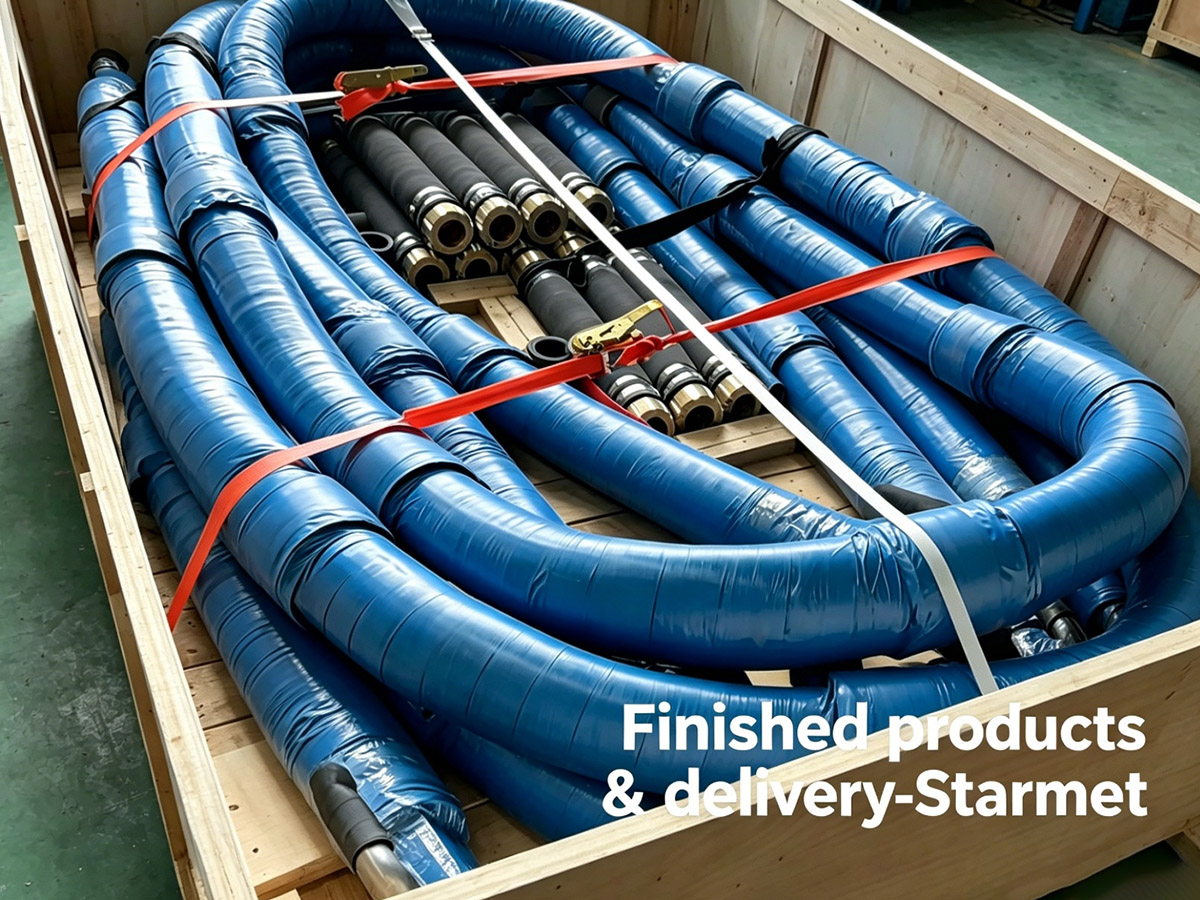
Here, "conventional cable" means a non-water-cooled power cable or flexible conductor assembly. It does not describe one standardized insulation system or temperature rating.
Water-cooled furnace cables typically combine flexible copper conductors, terminal connections, internal water passages, and a reinforced external hose. Designs vary: some arrange stranded copper ropes around a supporting tube rather than using one hollow conductor.
Manufacturers such as Druseidt describe these assemblies as flexible connections between the transformer system and electrode arms in electric arc furnaces and ladle furnaces. Their construction accommodates current loading, movement, and environmental stresses together. [druseidt]
| Selection factor | Water-cooled furnace cable | Conventional non-water-cooled cable |
|---|---|---|
| Heat removal | Circulating water removes conductor heat | Depends on passive heat dissipation and installation |
| Typical application | High-current, flexible furnace connections | Suitable feeders, auxiliary circuits, or validated lower-demand connections |
| Installation requirements | Electrical, mechanical, and hydraulic interfaces | Electrical and mechanical interfaces |
| Maintenance priorities | Hose condition, flow, terminals, conductor integrity | Insulation, terminals, routing, conductor integrity |
| Main limitation | Depends on reliable cooling and leak prevention | Thermal capacity may constrain high-current applications |
| Selection basis | Complete assembly and cooling-system design | Cable rating under actual installation conditions |
This comparison is a decision framework, not a substitute for manufacturer ratings or a furnace-specific engineering review.
A furnace cable experiences more than hot surrounding air. Nearby electrodes and furnace openings can expose it to radiant heat, while electrical resistance generates heat inside the conductor.
Furukawa's furnace-cable documentation also identifies bending, twisting, vibration, and electromagnetic forces as significant operating stresses. These loads explain why a cable can deteriorate even when its external appearance seems acceptable.
From an engineering perspective, treating "extreme temperature" as one number misses the real problem. A useful assessment separates:
- Ambient temperature along the cable route.
- Radiant exposure from nearby hot surfaces.
- Internally generated electrical heat.
- Local heating at terminal connections.
- Mechanical loading during furnace movement.
The temperature inside a furnace is not the permissible operating temperature of a nearby cable.
Likewise, a heat-protection material rating does not establish the temperature limit of the complete cable assembly. The hose, seals, conductor, terminal, and coolant each have their own constraints.
Druseidt, for example, lists different ratings for its protective materials and cooling-water hoses. Those figures describe particular components and conditions—not a universal furnace-cable operating temperature.
This distinction matters when comparing quotations. "Heat resistant" is incomplete unless the supplier identifies the component, exposure conditions, and operating limits.
Water-cooled cables circulate coolant through the assembly to carry away conductor heat. Their effectiveness depends on water reaching the intended cooling paths, not merely entering the hose.
Furukawa describes internal structures intended to distribute coolant along the conductor length. Druseidt similarly emphasizes cooling passage design, conductor arrangement, terminal construction, and protection against wear.
Active cooling can make a compact, flexible high-current connection practical where passive heat dissipation would be inadequate. However, it does not eliminate the need for correct sizing, clean contact surfaces, adequate support, and suitable movement geometry.
Water cooling also does not inherently reduce electrical resistance in every comparison. Copper area, conductor length, temperature, terminal quality, and assembly construction remain important.
The engineering objective is therefore not "add water." It is to coordinate electrical losses, heat removal, mechanical flexibility, and maintainability.
Conventional cables still have a role in metallurgical plants. Not every electrical connection experiences the same current, heat exposure, or movement as a furnace secondary circuit.
They may suit auxiliary equipment, protected supply routes, and other applications where their documented ratings satisfy the actual installation conditions.
Their simpler installation can avoid additional water connections, hoses, and cooling-system dependencies. But simplicity is useful only when the thermal and electrical requirements are met.
For demanding furnace connections, industry practice has moved strongly toward water-cooled designs. FLOHE attributes this transition to increasing electric furnace performance and the requirements of high-power installations.
The practical question is not whether conventional cable is "obsolete." It is whether the proposed conductor can operate within its validated limits in that specific location.
At Starmet, the appropriate discussion begins with operating information and interface drawings. A replacement cable should fit the process, installation, and maintenance strategy—not just the previous cable's nominal dimensions.
Provide operating current, duty cycle, frequency, transformer information, and cable arrangement. Distinguish total circuit current from the current carried by each parallel cable.
Identify nearby furnace openings, radiant sources, hot surfaces, and splash zones. Record where protective sleeves or shields are currently installed.
For water-cooled designs, confirm available flow, inlet temperature, operating pressure, pressure drop, and coolant quality against the selected supplier's requirements.
Avoid adopting a generic minimum flow from an unrelated cable specification.
Check the complete movement envelope, including electrode travel, furnace tilting, and roof movement where relevant. Inspect for twisting, rubbing, and unsupported loading near terminals.
Review bolt patterns, contact dimensions, connection orientation, cooling ports, and installation clearances. A physically attachable terminal is not automatically a correctly engineered connection.
Agree on dimensional inspection, electrical resistance measurement, leak or pressure testing where applicable, and required documentation. Test methods and limits should match the approved design.
Define inspection access, lifting arrangements, replacement procedures, and spare availability before commissioning. Furukawa specifically recommends keeping spare furnace cables because a cable failure can interrupt operation.
Visual inspection is necessary, but it cannot reveal every internal conductor problem.
Furukawa recommends four-terminal resistance measurement to assess conductor deterioration, alongside external hose inspection. This provides a stronger basis for replacement planning than appearance alone.
A practical maintenance record should include:
- Cable identification and installation date.
- Operating cycles or furnace heats.
- Resistance readings under comparable conditions.
- Cooling-water operating observations.
- Hose wear, leakage, and terminal condition.
- Changes to routing, loading, or furnace operation.
Resistance measurements should be interpreted with temperature and measurement conditions in mind. Comparing inconsistent readings can create misleading conclusions.
Maintenance intervals should follow the manufacturer's instructions and the plant's assessed operating severity. There is no defensible universal replacement interval for all furnace cables.
Any inspection or repair must follow site-approved electrical isolation and cooling-system isolation procedures. Leak investigation should never be treated as routine work on an energized assembly.
Consider a hypothetical electric arc furnace installation where a newly replaced water-cooled cable develops abnormal heating near one terminal.
Replacing the cable again may not address the underlying cause. The investigation should examine terminal contact condition, fastening requirements, conductor condition, water distribution, and mechanical loading.
The maintenance team might discover that the cable is forced into an unfavorable bend during part of the electrode travel. Alternatively, the problem could involve a restricted cooling connection or a deteriorated contact interface.
This example is illustrative, not a reported Starmet customer case.
Its lesson is important: repeated cable problems can indicate a system-level mismatch. Manufacturers explicitly link cable construction and service life to mounting conditions, planned movement, cooling design, and environmental exposure.
A successful corrective action should therefore explain why the failure occurred and verify that the revised installation addresses that cause.
A meaningful water-cooled cable versus conventional cable comparison includes more than the initial quotation.
Evaluate:
- Cable and installation cost.
- Cooling-system requirements.
- Inspection and maintenance effort.
- Repairability and replacement lead time.
- Spare inventory.
- Production interruption risk.
- Measured electrical losses under comparable operation.
Do not assume a water-cooled cable guarantees a particular energy-saving percentage or service life. Those outcomes require evidence from the actual design and operating conditions.
Likewise, a lower-cost conventional cable is not economical if its installation lacks adequate thermal capacity.
The strongest business case combines technically suitable equipment with documented operating performance and realistic maintenance costs. Supplier promises should be translated into measurable acceptance criteria wherever possible.
Xi'an Starmet Equipment Co., Ltd. serves the global steel, ferroalloy, and non-ferrous metal industries with metallurgical equipment and engineering solutions.
Our scope includes electric arc furnaces, submerged arc furnaces, refining furnaces, vacuum treatment systems, continuous casting equipment, and related equipment and spare parts.
For cable replacement or furnace upgrading, the useful starting point is the relationship between the component and the wider installation: electrical interfaces, cooling connections, movement, access, and project delivery requirements.
Our engineering design, equipment supply, manufacturing coordination, and technical support services can support discussions around customized solutions and equipment modernization.
Contact Xi'an Starmet with your furnace type, operating current, existing cable drawings, terminal photographs, cooling parameters, and failure history. Request a furnace-specific technical review before selecting a replacement or proposing an upgrade.
No. It is particularly relevant to demanding high-current furnace connections. Conventional cable remains appropriate where its electrical and thermal ratings meet the actual application. Selection requires installation-specific evaluation, not a temperature-based slogan.
Not without an engineering review. Removing active cooling changes the thermal design. Current capacity, routing, conductor dimensions, flexibility, terminal compatibility, and surrounding conditions must all be reassessed.
No. Sleeve material ratings do not define the complete assembly's operating limit. Hose, seals, coolant, conductors, and terminals may have different limits. The supplier must confirm the rating of the assembled product.
Documented stresses include bending, twisting, vibration, electromagnetic forces, external abrasion, and radiant heat. Cooling performance and terminal construction also matter. Investigation should consider these mechanisms together rather than assigning every failure to heat.
Combine manufacturer guidance, visual condition, electrical resistance trends, operating history, and cooling-system observations. Replace according to assessed condition and approved criteria rather than relying only on a fixed calendar interval.
Provide furnace type, electrical duty, cable quantity and dimensions, terminal drawings, movement requirements, cooling data, installation photographs, and previous failure details. These inputs help define the application before discussing supply or modification.
1. Xi'an Starmet Equipment Co., Ltd. — Company profile supplied for this article. Source of the company description, industry coverage, equipment scope, and service capabilities. No company website link was supplied; none has been invented.
2. Furukawa Electric — [Water Cooled Cable for Electric Furnace]. Brochure information dated July 2015. Technical basis for furnace-cable stresses, coolant distribution, four-terminal resistance assessment, hose inspection, and spare-cable planning. Historical manufacturer guidance, not a current Starmet product specification. [furukawaelectric]
3. Paul Druseidt Elektrotechnische Spezialfabrik — [Water Cooled High Current Cables, Preferably for Electric Arc and Ladle Furnaces]. Edition October 2023. Technical basis for construction, mounting and movement considerations, cooling passages, protection materials, and assembly-specific limitations. [druseidt]
4. FLOHE — [Furnace Construction: High-Current Technologies]. Brochure dated June 2019. Industry context for the shift from air-cooled to water-cooled high-current furnace cables. [flohe]
5. Google Search Central — [Creating Helpful, Reliable, People-First Content]. Editorial basis for useful original analysis, clear sourcing, demonstrated expertise, and trustworthy presentation. E-E-A-T is a quality framework, not a certification or ranking guarantee. [developers.google]
Hot Tags: China, Global, OEM, private label, manufacturers, factory, suppliers, manufacturing company


