Please Choose Your Language

Views: 237 Author: Xi’an Starmet Publish Time: 2026-09-29 Origin: Site


Content Menu
● Typical blast furnace lifespan
● What limits blast furnace life?
>> Burden quality and gas-flow control
>> Tapping and cast-house practice
● How blast furnace age is assessed
>> Core condition-monitoring methods
>> Expert insight: trend quality matters more than one hot reading
>> 1. Protect the hearth from the start
>> 2. Operate for stability, not only maximum output
>> 3. Maintain consistent raw-material quality
>> 4. Improve predictive maintenance
>> 5. Plan reline decisions early
● When should a blast furnace be relined?
● Xi'an Starmet's engineering approach
● FAQ
>> 1. What is the average lifespan of a blast furnace?
>> 2. What part of a blast furnace usually determines its lifespan?
>> 3. Can a blast furnace operate for more than 20 years?
>> 4. How can furnace operators extend blast furnace campaign life?
>> 5. How long does a blast furnace reline take?
>> 6. Is a partial repair enough to extend blast furnace life?
>> 7. What data should be reviewed before deciding on a reline?
At Xi'an Starmet Equipment Co., Ltd., we support global steel, ferroalloy, and non-ferrous metal producers with metallurgical engineering, equipment supply, manufacturing coordination, project delivery, and spare-parts services. When customers ask, "What is the lifespan of a blast furnace?", the practical answer is that a modern blast furnace typically operates for 15 to 20 years between major relines—known as its campaign life—but actual performance can range from roughly 10 years to more than 20 years depending on furnace design, refractory condition, cooling performance, operating discipline, burden quality, and hearth management.
A blast furnace does not simply "expire" on a fixed calendar date. Its service life is determined mainly by the condition of its hearth refractory lining, cooling equipment, shell integrity, and the furnace's ability to continue producing hot metal safely and stably. In our engineering view, the goal is not only to extend operating years. It is to maximize safe campaign output, maintain predictable production, reduce unplanned outages, and prepare the reline or modernization scope before critical wear becomes a safety or availability issue.
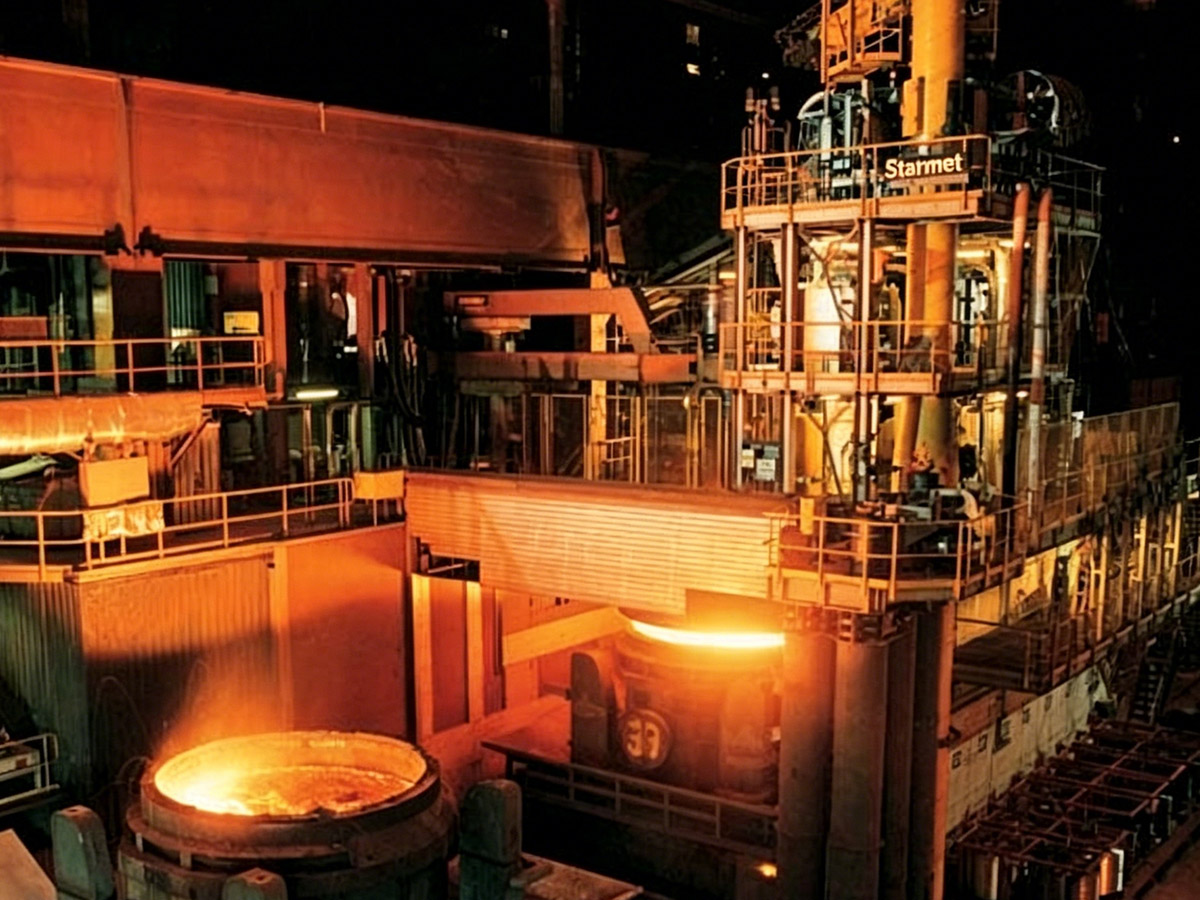
The most widely used measure of blast furnace lifespan is campaign life. This means the continuous operating period from furnace blow-in until a major rebuild or complete reline is required.
For many modern integrated steel plants, the expected campaign life is approximately 15–20 years. Well-designed and well-operated furnaces can exceed 20 years, while furnaces experiencing severe hearth wear, unstable burden movement, cooling-system deterioration, prolonged shutdowns, poor raw-material consistency, or excessive thermal cycling may require major intervention earlier.
| Blast furnace condition | Typical campaign-life range | Main operational implication |
|---|---|---|
| Poorly controlled or highly unstable operation | About 10–12 years | Premature lining damage and higher reline risk |
| Standard modern blast furnace operation | About 15–20 years | Typical target for a planned campaign |
| Best-practice design and operating discipline | More than 20 years | Requires strong hearth protection, monitoring, and maintenance |
| After a full reline | Approximately another 20 years potential | Depends on the new lining, cooling design, and operation strategy |
A 20-year estimate should be understood as a planning benchmark, not a guarantee. Industry analyses commonly use 20 years as a standard campaign-life assumption, while explicitly recognizing that true service life changes with market conditions, operating practices, and furnace condition.
For steelmakers, this distinction matters. A furnace that runs for 20 years but experiences severe instability, high refractory consumption, declining productivity, repeated emergency maintenance, or unacceptable safety exposure may not be delivering an economically successful campaign. Conversely, a furnace with a disciplined condition-monitoring program may sustain a longer, safer, and more valuable campaign.
The central limiting factor is usually the hearth and hearth-bottom refractory system. The hearth holds liquid hot metal and slag at high temperature for long periods. Unlike upper-stack refractory areas, which may be repaired locally in some cases, severe hearth erosion normally requires a major shutdown and reline.
Modern research and industrial practice consistently identify hearth refractory erosion as the principal factor governing a blast furnace's ultimate campaign life. As the remaining refractory thickness decreases, the risk of shell overheating, liquid-metal penetration, uncontrolled wear, and potentially dangerous breakthrough rises.
The hearth operates under the most demanding conditions in the furnace. Carbon and graphite refractories can be attacked by hot metal, slag, alkalis, zinc, thermal stress, infiltration, and high-velocity liquid flow.
Key damage mechanisms include:
- Chemical dissolution of carbon-based hearth refractories by unsaturated hot metal and slag.
- Mechanical erosion caused by liquid iron and slag circulation near the hearth sidewall and tap-hole zone.
- Thermal cycling caused by operating fluctuations, irregular tapping, unplanned stops, and changes in heat load.
- Alkali and zinc attack, which can penetrate pores and cracks, weaken refractory materials, and accelerate structural deterioration.
- Loss of the protective skull, the solidified layer that can reduce direct contact between liquid metal and the refractory lining.
- Cooling inefficiency, which increases local temperatures and accelerates lining wear.
The most critical zones often include the hearth sidewall, the hearth bottom, the area below tap holes, and localized regions exposed to abnormal liquid flow. In practice, a furnace can appear stable from an overall production perspective while a specific hearth zone deteriorates rapidly. That is why condition monitoring must be spatially detailed rather than based only on average furnace temperatures.
A blast furnace's cooling system is not merely an auxiliary utility. It is a primary life-extension system.
Cooling staves, cooling plates, tuyere coolers, bosh cooling assemblies, and hearth cooling circuits help control the thermal load on refractory materials and encourage the formation of a protective accretion or skull. If cooling-water flow, water quality, pressure, temperature difference, or circuit integrity becomes unreliable, refractory wear can accelerate.
At Xi'an Starmet Equipment, our project perspective is that cooling-system reviews should be integrated with refractory, instrumentation, and operating assessments. Replacing a worn component without reviewing the surrounding thermal conditions may solve only part of the problem.
Critical cooling-management priorities include:
- Stable cooling-water flow and verified heat-removal capacity.
- Continuous monitoring of inlet and outlet water temperatures.
- Detection of flow restrictions, scaling, leakage, corrosion, and blocked cooling passages.
- Assessment of local heat-flux trends rather than relying only on overall water-temperature averages.
- Coordination between cooling repairs and burden-distribution strategy to avoid repeated thermal overload in the same area.
The burden controls gas flow, liquid flow, thermal load, permeability, and wall protection. Poor or inconsistent burden conditions can create unstable furnace behavior that shortens campaign life.
Coke quality is especially important because coke supports the burden column, creates permeability, and influences hearth drainage. A weak, highly reactive, excessively fine, or inconsistent coke can impair permeability, encourage irregular burden descent, increase pressure fluctuations, and contribute to unstable thermal conditions.
Burden distribution also affects the furnace's radial gas flow. If too much gas travels near the wall, wall heat load increases and refractory or cooling components can deteriorate more quickly. If the wall becomes excessively inactive, large accretions may form and impair smooth burden descent. The operating target is therefore a controlled balance: protect the wall without creating an unstable inactive zone.
Tapping practice directly affects liquid level, liquid-flow paths, tap-hole durability, hearth drainage, and refractory wear.
Poor tapping control can leave excessive liquid inventory in the hearth, increase local velocities, create irregular drainage, or concentrate erosion near one sidewall. Tap-hole length, diameter, tap-hole mass quality, casting frequency, casting rate, and the use of multiple tap holes all influence hearth conditions.
From an equipment and engineering standpoint, stable cast-house performance requires reliable drilling, mud-gun, runner, tilting, slag-handling, and hot-metal transport systems. A delay in casting can quickly become a furnace-stability issue rather than a local cast-house issue.
A blast furnace should not be assessed only by its years since blow-in. The correct question is: How much safe residual life remains in the hearth, stack, cooling system, and critical operating equipment?
A practical residual-life assessment combines operating data, inspection results, equipment condition, and thermal modelling.
| Monitoring method | What it shows | Why it matters |
|---|---|---|
| Hearth thermocouples | Local refractory temperature trends | Helps identify abnormal heating and possible lining loss |
| Cooling-water flow and temperature | Heat-removal behavior and cooling efficiency | Detects thermal-load changes and cooling degradation |
| Heat-flux calculation | Changes in heat transfer through hearth or staves | Supports wear assessment and trend analysis |
| Wall thermocouples | Stack, bosh, belly, and wall thermal behavior | Identifies asymmetrical operation and hot zones |
| 3D thermal modelling | Estimated residual lining profile | Supports reline planning and localized risk management |
| Burden-distribution measurement | Radial profile, gas distribution, and wall protection | Reduces localized thermal attack |
| Visual inspection during outages | Equipment condition, cracking, leakage, mechanical wear | Validates operating data and repair priorities |
Thermocouples installed at different depths within the hearth can help estimate the thermal profile and remaining lining thickness. A three-dimensional inverse heat-transfer model can use thermocouple data to estimate the hearth-wear profile and track changes over time.
This approach is particularly valuable because hearth wear is rarely uniform. A single average temperature cannot reveal whether a local "elephant-foot" wear region is developing near the base of the sidewall or beneath a tap hole.
In technical reviews, we often advise operators not to overreact to one isolated temperature spike and not to ignore a slow, persistent trend.
A useful evaluation asks:
1. Is the temperature rise local or widespread?
2. Is the rise transient, cyclical, or continuously increasing?
3. Does it correlate with changes in tapping, production rate, blast volume, burden distribution, or cooling-water performance?
4. Is the temperature behavior supported by heat-flux data and neighboring thermocouples?
5. Does the trend indicate a process problem, sensor problem, or real refractory wear?
This structured method helps distinguish an instrumentation issue from a developing hearth-risk condition.
A longer blast furnace campaign is built through design, operation, monitoring, repair, and decision discipline. No single technology can compensate for unstable operation or poor maintenance management.
The hearth should be managed as the campaign-limiting asset from the earliest stage of operation. This includes maintaining stable liquid drainage, avoiding prolonged high liquid levels, preserving a suitable protective skull, controlling thermal fluctuations, and responding quickly to unfavorable hearth-temperature trends.
Where appropriate, titanium-bearing additions may be considered as part of a broader hearth-protection strategy because titanium carbonitrides can contribute to protective deposits in eroded areas. However, such additions must be controlled carefully. High titanium levels can create operational problems, including higher slag viscosity and casting difficulties.
Pushing a furnace continuously at its highest possible production rate can increase material throughput, hearth activity, liquid flow, and wall heat load. Long campaigns are commonly associated with stable and consistent operation, not only with the highest short-term productivity.
This does not mean production should be unnecessarily restricted. It means production targets must be aligned with furnace condition, cooling capacity, refractory condition, burden quality, and cast-house capability.
Stable coke, sinter, pellet, ore, flux, and injected-fuel quality are essential. Sudden variations in size distribution, moisture, strength, reducibility, alkali content, or fines generation can disrupt permeability and thermal control.
Operators should focus on:
- Coke strength and size consistency.
- Low fines generation in the burden.
- Stable pellet and sinter quality.
- Controlled alkali and zinc input.
- Appropriate softening and melting characteristics of the total burden mix.
- Consistent charging practice and accurate burden-distribution control.
Predictive maintenance links mechanical reliability with metallurgical performance. Cooling-system reliability, tuyere condition, bell-less-top performance, charging-chute wear, tap-hole equipment, mud-gun performance, and cast-house availability all affect furnace stability.
A successful program should include:
- Routine thermal and cooling-data review.
- Defined alarm limits and escalation actions.
- Inspection plans for critical water-cooled components.
- Spare-parts planning for long-lead furnace equipment.
- Root-cause analysis after every major temperature excursion, tuyere failure, tapping delay, or prolonged off-blast event.
- Condition-based repair planning rather than purely calendar-based maintenance.
A major reline is not an emergency-maintenance activity. It is a multi-disciplinary capital project involving engineering, procurement, refractory selection, cooling-system modernization, shell inspection, instrumentation, construction coordination, commissioning, and production planning.
Industry analysis indicates that full blast-furnace relines can cost around US$300 million, with some projects reaching much higher levels depending on scope, region, capacity, upgrades, and market conditions. A full reline is commonly expected to extend furnace operation by approximately 20 years, while targeted partial repairs may extend life by roughly 3–10 years in suitable cases.
A blast furnace should be considered for a major reline when continuing operation can no longer meet safety, reliability, productivity, or economic requirements.
Typical warning signals include:
- Persistent increase in hearth-wall or hearth-bottom temperatures.
- Declining estimated residual refractory thickness.
- Reduced cooling effectiveness or repeated cooling-system failures.
- Recurring local hot spots that cannot be stabilized through operating adjustments.
- Severe shell-temperature concerns.
- Frequent unplanned outages caused by furnace-critical equipment.
- Increasing maintenance cost and falling availability.
- Production restrictions required to keep the furnace within safe thermal limits.
- A strategic need to modernize furnace automation, cooling, environmental equipment, charging systems, or energy efficiency.
The right decision is not always a full reline. Depending on furnace condition and business strategy, the options may include targeted repairs, intermediate stack work, cooling-system upgrades, partial rebuilds, hot idling, conversion to alternative ironmaking technology, or permanent shutdown.
For a company operating in an evolving steel market, the technical question must be linked to the business question: Will a full reline create the right level of safe, competitive capacity for the next campaign?
At Xi'an Starmet Equipment Co., Ltd., we approach blast furnace lifespan as a system-level engineering challenge. A furnace's campaign life is influenced by the interaction of process conditions, refractory design, cooling equipment, burden charging, tapping practice, mechanical reliability, and maintenance execution.
Our services for metallurgical plants can support this lifecycle through:
- Engineering design for new equipment, furnace-system modernization, and process upgrades.
- Equipment supply for metallurgical production systems and auxiliary equipment.
- Manufacturing coordination to align fabrication quality, delivery schedules, technical specifications, and site requirements.
- Project delivery support for complex installation, upgrade, and commissioning work.
- Spare-parts services for critical furnace, casting, cooling, and metallurgical-equipment components.
- Customized engineering solutions based on production process, site constraints, operational bottlenecks, and investment objectives.
- Technical support for reliability improvement, equipment upgrades, and stable operation.
Our product and solution capabilities extend across electric arc furnaces, submerged arc furnaces, refining furnaces, vacuum-treatment systems, continuous casting equipment, related metallurgical equipment, and spare parts. For integrated steel plants, this broader experience is valuable because blast-furnace availability must align with downstream steelmaking, hot-metal logistics, refining, casting, and plant-wide production planning.
The average blast furnace campaign life is generally 15–20 years before a major reline is required. Actual life may be shorter or longer depending on hearth wear, cooling performance, raw-material quality, operating stability, maintenance quality, and production intensity.
The hearth refractory lining usually determines the final campaign life. The hearth contains molten hot metal and slag, and its refractory lining is exposed to chemical attack, mechanical erosion, thermal stress, and liquid-metal flow.
Yes. A well-designed and carefully operated furnace can exceed 20 years. Long campaigns usually depend on stable operation, reliable cooling, effective burden control, high-quality raw materials, detailed thermal monitoring, disciplined tapping practice, and timely repair decisions.
Operators can extend campaign life by protecting the hearth, maintaining reliable cooling, controlling gas flow and burden distribution, using consistent coke and ore quality, avoiding excessive thermal cycling, optimizing tapping practice, monitoring refractory wear, and planning repairs before conditions become critical.
The physical construction duration varies substantially by furnace size and reline scope. Some major relining projects have been completed in several months, but the total program—including feasibility study, engineering, procurement, approval, shutdown planning, and commissioning—can take years.
A partial repair can be appropriate when wear is localized and the hearth remains within safe limits. It may extend service life by several years. However, partial work cannot replace a full reline when the hearth lining has reached critical residual thickness or the furnace requires broad structural and equipment renewal.
Review hearth thermocouple trends, estimated residual lining thickness, cooling-water performance, heat flux, shell temperatures, furnace-wall temperature maps, tapping performance, refractory-wear history, equipment reliability, unplanned outage records, production requirements, and long-term business strategy.
A blast furnace's lifespan is not determined by age alone. It is determined by how effectively the furnace is designed, monitored, operated, maintained, repaired, and upgraded throughout its campaign.
If your plant is evaluating blast furnace life extension, refractory-risk management, cooling-system improvement, equipment replacement, spare-parts planning, or a major modernization project, Xi'an Starmet Equipment Co., Ltd. can help develop a practical engineering approach aligned with your process conditions and site objectives. Contact our technical team to discuss your furnace condition, operating challenges, and project requirements.
1. IspatGuru. "Operation Practices and Campaign Life of a Blast Furnace." Discusses operational stability, burden quality, burden distribution, hearth protection, monitoring, tap-hole practice, and other factors affecting campaign life. [Read the source] [ispatguru]
2. Australasian Centre for Corporate Responsibility. "Steelmakers Face Crunch-Time on Coal: Critical Risks in Blast Furnace Relining Decisions." May 2025. Provides industry context on average campaign life, reline costs, full- and partial-reline implications, and planning timelines. [Read the report] [accr.org]
3. COMSOL. "COMSOL® Application to Estimate 3D Blast Furnace Hearth Wear Using Thermocouple Measurements." Explains how thermocouple measurements and inverse three-dimensional heat-transfer models can be used to estimate hearth wear and remaining refractory thickness. [Read the source] [comsol]
4. Cambridge University Press. "Blast Furnace Campaign Life Relating to the Productivity." Examines the relationship between operating productivity, hearth erosion, and campaign life. [Read the source] [cambridge]
5. Springer Nature. "Blast Furnace Campaign Life for a Continuous Period." Reference entry addressing the concept of blast furnace campaign life. [Read the source] [link.springer]
Hot Tags: China, Global, OEM, private label, manufacturers, factory, suppliers, manufacturing company


