Please Choose Your Language

Views: 260 Author: Xi’an Starmet Publish Time: 2026-10-13 Origin: Site


Content Menu
● What Is EAF Oxygen Injection?
● Manual Lance Operation: Familiar, Flexible, But Demanding
>> Advantages of Manual Operation
>> Limitations of Manual Operation
● What Is an EAF Lance Manipulator?
● Lance Manipulator vs Manual Lance Operation
● Why Lance Positioning Accuracy Matters
● Safety: The Most Important Difference
● Productivity and Cost Impact
● Practical Selection Checklist
>> 1. Define the Process Objective
>> 2. Match the System to Furnace Layout
>> 3. Specify Movement Requirements
>> 4. Integrate Safety and Automation
● Implementation Steps for a Successful Upgrade
● When Manual Lancing Still Makes Sense
● Xi'an Starmet's Engineering Perspective
>> 1. Is a lance manipulator suitable for every EAF?
>> 2. Can a lance manipulator reduce oxygen consumption?
>> 3. Does a manipulator eliminate the need for manual lancing?
>> 4. What maintenance does an EAF lance manipulator require?
>> 5. How long does implementation usually take?
>> 6. Can a lance manipulator be added to an existing EAF?
For most electric arc furnace (EAF) melt shops, oxygen injection is no longer simply a way to cut scrap faster. It is a core process-control tool that influences decarburization, foamy slag, chemical energy input, electrode consumption, refractory wear, dust generation, and tap-to-tap time. The real question is therefore not *whether* to inject oxygen, but how consistently and safely the lance can be positioned, controlled, and maintained.
As a company specializing in metallurgical equipment and engineering solutions, Xi'an Starmet Equipment Co., Ltd. works with steel, ferroalloy, and non-ferrous producers to improve furnace availability and process stability. From our project experience, the choice between a lance manipulator and manual lance operation is rarely only an equipment-purchase decision. It is an operational decision that affects safety exposure, oxygen efficiency, operator skill requirements, consumable use, and long-term production cost.
This article compares both methods from a practical melt-shop perspective, explains where each can be appropriate, and outlines how to specify a lance manipulator that fits your furnace layout, scrap mix, power profile, and production targets.

In an EAF, oxygen is injected to accelerate melting and refining. Typical objectives include:
- Cutting and collapsing scrap, especially large or densely packed material.
- Increasing chemical energy through oxidation of carbon, silicon, and other elements.
- Supporting decarburization during refining.
- Creating and maintaining foamy slag to protect the refractory and improve arc stability.
- Improving bath stirring and heat transfer.
- Reducing electrical energy consumption when oxygen and carbon injection are properly coordinated.
Oxygen lancing can be performed manually with handheld pipes or through a mechanized EAF lance manipulator. A manipulator is typically installed at the slag door or sidewall and can guide one or more lances into the furnace with controlled horizontal, vertical, and angular movement. Modern systems may also support carbon injection, temperature measurement, sampling, and automatic retraction.
Manual lance operation remains common in many EAF shops, particularly where capital budgets are constrained, furnaces are smaller, or production is intermittent. An experienced operator uses a consumable lance pipe to cut scrap, direct oxygen into the bath, and manage localized slag or scrap conditions.
Manual lancing offers several practical benefits:
- Lower initial investment than a full manipulator system.
- High operator flexibility for unusual scrap conditions, bridge formation, or localized slag buildup.
- Simple intervention when only occasional oxygen support is required.
- Familiar technology for many operating teams.
For a furnace that operates irregularly or handles highly variable scrap, manual lancing can still be useful as a supplementary tool.
However, manual operation depends heavily on the individual operator. That creates process variability.
Key limitations include:
- Higher safety exposure. Operators work near intense heat, radiation, molten material, fume, noise, and high-pressure oxygen systems.
- Inconsistent lance angle and depth. Small differences in positioning can change oxygen penetration, splash behavior, and reaction efficiency.
- Greater consumable consumption. Handheld lance pipes are consumed quickly, especially during aggressive scrap cutting.
- More operator fatigue. Long campaigns, heavy pipes, heat exposure, and repetitive movements reduce precision over a shift.
- Limited repeatability. Two operators—or even the same operator at different times—may not apply oxygen in the same way.
- Slower response during high-production periods. Manual operation can become a bottleneck when the furnace requires continuous, coordinated oxygen and carbon injection.
In our experience, the biggest hidden cost of manual lancing is not the lance pipe itself. It is the combination of inconsistent oxygen utilization, longer melting time, avoidable delays, and increased operator risk.
An EAF lance manipulator is a mechanized system that positions and controls oxygen lances—often together with carbon injectors—during melting and refining. Depending on the design, it may be mounted at the furnace door or on the sidewall and operated remotely from the control pulpit.
A well-engineered manipulator typically includes:
- A heavy-duty support structure.
- One or more lance holders with independent movement.
- Hydraulic, pneumatic, or electric drive systems.
- Oxygen and carbon supply connections.
- Water-cooled protection where required.
- Remote-control or automated operation.
- Safety interlocks, emergency retraction, and maintenance access.
- Optional temperature-measurement and sampling functions.
The central value is repeatable lance positioning. Instead of relying on an operator to hold a pipe at the correct angle under extreme conditions, the manipulator maintains a defined trajectory, depth, and injection pattern.
| Factor | Manual Lance Operation | Lance Manipulator |
|---|---|---|
| Initial investment | Lower | Higher |
| Safety exposure | High; operator remains near furnace | Lower; remote operation possible |
| Lance positioning | Operator-dependent | Repeatable and programmable |
| Oxygen utilization | Variable | Generally more consistent |
| Scrap-cutting flexibility | High for localized intervention | Strong for routine and coordinated injection |
| Operator fatigue | High | Lower |
| Lance pipe consumption | Usually higher | Often reduced through controlled operation |
| Process repeatability | Limited | Strong |
| Maintenance requirement | Low equipment complexity | Requires planned mechanical and hydraulic maintenance |
| Best application | Small furnaces, intermittent operation, supplementary lancing | High-production EAFs, continuous operation, safety-focused melt shops |
Neither option is universally "better." The correct answer depends on production intensity, furnace size, scrap quality, staffing model, safety policy, and the level of process automation already installed.
Oxygen injection is highly sensitive to lance position. If the lance is too far from the bath, oxygen may react in the freeboard or with slag rather than delivering energy efficiently to the metal. If it is too close or incorrectly angled, the result can be excessive splash, refractory damage, unstable slag foaming, or unsafe operating conditions.
A manipulator helps solve this problem by providing:
- Consistent insertion angle.
- Repeatable depth control.
- Stable lateral positioning.
- Controlled movement speed.
- Coordinated oxygen and carbon injection.
- Remote adjustment without exposing personnel.
This repeatability becomes especially valuable when a melt shop is trying to stabilize power-on time, reduce electrode consumption, and achieve predictable tap chemistry.
EAF oxygen lancing is one of the more hazardous routine activities on the melting floor. Manual operation places personnel close to:
- Molten metal and slag splash.
- Thermal radiation.
- Oxygen-enriched atmospheres.
- High-pressure gas lines.
- Flying debris and scrap movement.
- Noise and fume exposure.
A lance manipulator allows operators to perform routine injection from a protected control location. This does not eliminate risk—oxygen systems, hoses, valves, and furnace operations still require rigorous procedures—but it substantially reduces direct exposure during normal operation.
For plants pursuing higher safety standards or "fewer people around the furnace" operating models, mechanized lancing is often a strategic step rather than a luxury.
The productivity benefit of a manipulator comes from several sources:
1. Faster scrap cutting and melting support. Controlled oxygen delivery can help reduce delays caused by scrap bridges, dense charge zones, or cold spots.
2. More efficient chemical energy use. Stable lance positioning supports better carbon-oxygen reactions and foamy slag development.
3. Reduced manual intervention. Operators spend less time changing pipes, repositioning, and managing heat exposure.
4. Lower consumable waste. Controlled injection can reduce unnecessary lance pipe consumption.
5. Improved furnace availability. Fewer manual delays and more predictable refining cycles support higher furnace utilization.
The exact savings vary by plant. Factors such as scrap mix, power input, oxygen capacity, carbon injection design, furnace size, and operator discipline all influence results. A realistic evaluation should therefore be based on the plant's own baseline data—not only supplier claims.
Before selecting a lance manipulator, Xi'an Starmet recommends reviewing the following points with your operations, maintenance, electrical, and safety teams.
Clarify whether the system is intended mainly for:
- Scrap cutting.
- Decarburization.
- Foamy slag generation.
- Carbon injection.
- Combined oxygen and carbon injection.
- Sampling and temperature measurement.
A system designed only for oxygen lancing will have a different structure, control philosophy, and budget from a multifunctional manipulator.
Check:
- Available space at the slag door or sidewall.
- Furnace tilt range and platform movement.
- Roof electrode positions.
- Water-cooled panel locations.
- Maintenance access routes.
- Existing hydraulic, water, oxygen, and carbon infrastructure.
A manipulator that is difficult to access for maintenance will eventually become a reliability problem.
Important parameters include:
- Number of lances.
- Lance length and diameter.
- Horizontal and vertical travel.
- Rotation or swing angle.
- Insertion depth.
- Retraction speed.
- Emergency retract function.
- Compatibility with consumable or water-cooled lances.
For furnaces with variable scrap conditions, independent lance movement can be particularly useful.
The manipulator should not be treated as an isolated mechanical device. It should be integrated with:
- Oxygen valve stands and flow control.
- Emergency shutdown logic.
- Furnace interlocks.
- Operator pulpit controls.
- Alarm and fault diagnostics.
- Maintenance-mode procedures.
- Training and standard operating procedures.
Remote operation is valuable only when the surrounding control and safety architecture is equally robust.
A structured implementation approach reduces commissioning risk and accelerates payback.
1. Conduct a baseline audit. Record tap-to-tap time, power-on time, oxygen consumption, lance pipe use, electrode consumption, delay causes, and safety incidents.
2. Review furnace geometry and utilities. Confirm installation space, oxygen supply capacity, cooling-water conditions, and control-system interfaces.
3. Select the appropriate configuration. Decide between door entry, sidewall entry, single-lance, multi-lance, or multifunctional systems.
4. Define operating procedures. Establish standard lance trajectories, oxygen flow ranges, carbon injection coordination, and abnormal-condition responses.
5. Train operators and maintenance staff. Include normal operation, emergency retraction, hose management, valve-stand checks, and mechanical inspection.
6. Commission with production trials. Compare key indicators before and after installation under comparable operating conditions.
7. Optimize continuously. Adjust injection practice based on scrap type, slag condition, power profile, and product mix.
From an engineering and delivery perspective, these are the issues we most often see:
- Buying a manipulator without reviewing oxygen supply capacity. A mechanized lance cannot compensate for inadequate oxygen flow, pressure, or valve control.
- Ignoring maintenance access. Heat, slag, dust, and limited space can make routine inspection difficult.
- Over-automating too quickly. Operators need clear procedures and training before full automatic operation is introduced.
- Using inconsistent carbon injection. Oxygen performance depends heavily on coordinated carbon addition and slag control.
- Focusing only on purchase price. Lifecycle cost includes consumables, downtime, maintenance, safety exposure, and process variability.
- Failing to establish a baseline. Without pre-installation data, it is difficult to prove the actual benefit.
A lance manipulator is not always necessary. Manual operation may remain reasonable when:
- The furnace is small and operated intermittently.
- Oxygen lancing is only used for occasional scrap cutting.
- Capital expenditure is severely limited.
- The plant has strong manual-lancing procedures and trained personnel.
- The furnace layout cannot accommodate a manipulator without major modification.
Even then, manual lancing should be supported by strict oxygen safety procedures, proper personal protective equipment, controlled hose routing, and clear limits on operator exposure.
At Xi'an Starmet Equipment Co., Ltd., we view the lance manipulator as part of a complete EAF process solution—not an isolated accessory. Our team supports customers across the steel, ferroalloy, and non-ferrous sectors with engineering design, equipment supply, manufacturing coordination, project delivery, spare parts, upgrade services, and technical support.
Our approach begins with the customer's actual operating conditions: furnace capacity, scrap quality, power supply, oxygen infrastructure, carbon injection system, refractory practice, and production targets. From there, we help define a solution that balances investment, safety, reliability, and operational benefit.
Whether the requirement involves an EAF, submerged arc furnace, refining furnace, vacuum treatment system, continuous casting equipment, or related metallurgical equipment, our goal is the same: help customers achieve higher production efficiency, improved equipment reliability, and more stable long-term operation.
No. It is most valuable for furnaces with regular production, high oxygen demand, safety concerns, or a need for repeatable oxygen and carbon injection. Smaller or intermittent furnaces may still use manual lancing effectively.
It can improve oxygen utilization by maintaining more consistent lance positioning and injection practice. Actual savings depend on scrap mix, furnace practice, carbon injection, oxygen supply quality, and operator procedures.
Not always. Some plants retain manual lancing for exceptional conditions, such as unusual scrap bridges or localized slag issues. However, a manipulator can reduce routine manual intervention substantially.
Typical requirements include inspection of structural components, hydraulic or pneumatic systems, hoses, valves, lance holders, cooling circuits, sensors, limit switches, and control functions. A preventive maintenance plan is essential in the high-temperature EAF environment.
The timeline depends on furnace access, civil and mechanical modifications, utility preparation, control integration, and commissioning requirements. A detailed site survey and engineering review should be completed before committing to a schedule.
Yes, in many cases. Retrofit projects require careful evaluation of available space, furnace platform movement, oxygen and carbon supply, cooling water, electrical control, and safety interlocks.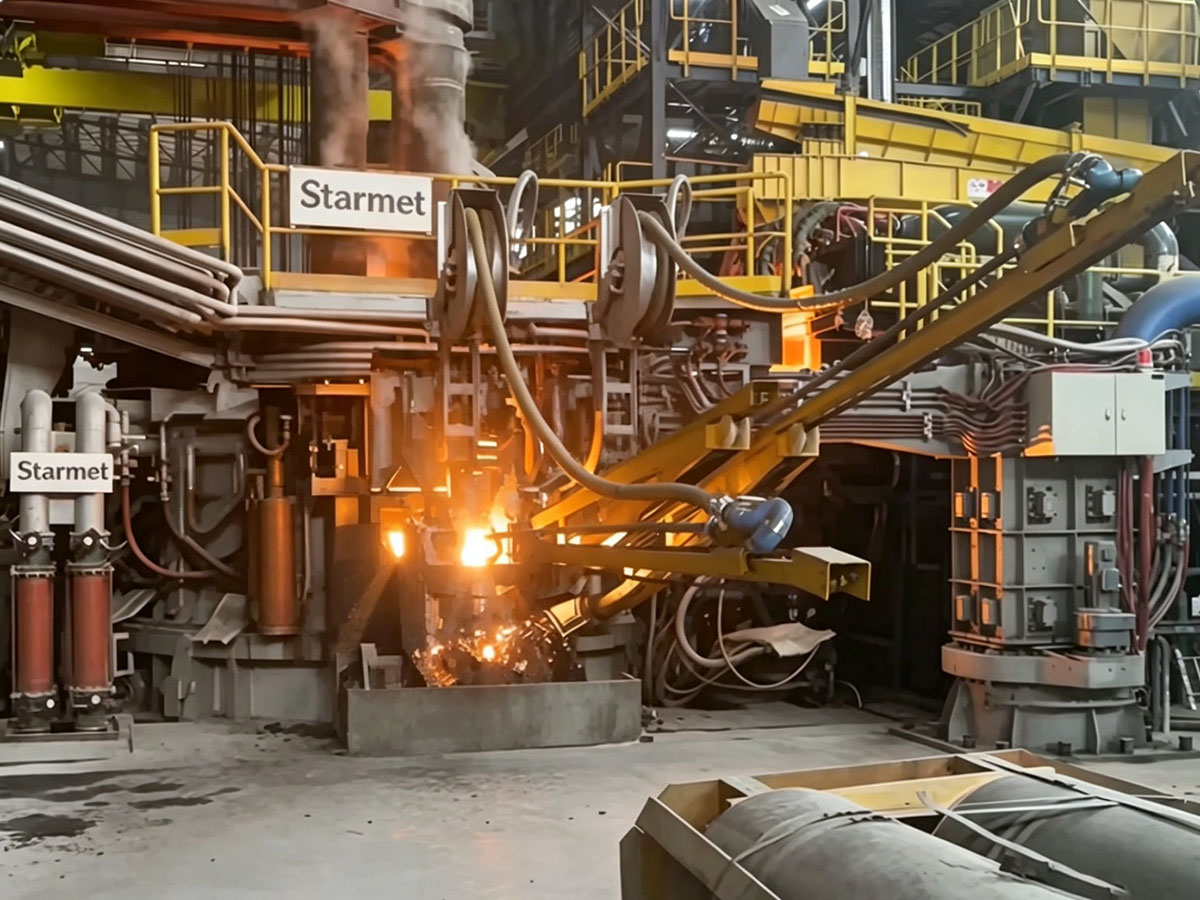
- [Optimizing Oxygen Injection in Electric Arc Furnaces for Productivity – PatSnap Eureka]
- [Manipulator for Carbon and Oxygen Consumable Lances – CEBA S.p.A.]
- [Lance Manipulator2 – Badische Stahl Engineering]
- [Water Cooled Lance Manipulators – Exo Technologies]
- [Effect of Lance Structure on Behavior of Coherent Jet in EAF – PMC]
- [The Complete Guide to Electric Furnace Oxygen Lance – Sanrui]
- [How Does Daiwa CC Lance Work in an Electric Arc Furnace (EAF)? – Daiwa Lance]
- [Electric Arc Furnace 101 – Graphite Equipment]
Hot Tags: China, Global, OEM, private label, manufacturers, factory, suppliers, manufacturing company


