


Views: 253 Author: Xi’an Starmet Publish Time: 2026-10-12 Origin: Site


Content Menu
● Top Oxygen Burner Manufacturers and Suppliers in Middle East: Supplier Shortlist
>> 1. Xi'an Starmet Equipment Co., Ltd.: Customized Metallurgical Engineering and Equipment Supply
>> 2. Tenova: EAF Chemical-Energy and Furnace Integration
>> 3. Fives: Combustion Systems for Non-Ferrous Metallurgy
>> 4. Linde: Oxy-Fuel Technology and Regional Gas Infrastructure
>> 5. Air Liquide: Oxygen Supply and Engineering Support
● Oxygen Burner Supplier Comparison for Middle Eastern Projects
● What Is an Oxygen Burner, and How Does It Differ from an Oxygen Lance?
● How to Select an Industrial Oxygen Burner for Your Furnace
>> Match the Burner to the Actual Process
>> Verify Oxygen, Fuel, and Cooling Conditions
>> Define Maintenance and Replacement Requirements
● Three Procurement Gaps That Buyers Should Address
>> 1. Compare Total Operating Cost, Not Fuel Savings Alone
>> 2. Establish a Measurable Acceptance Test
>> 3. Verify Service Coverage Instead of Assuming It
● A Practical Oxygen Burner Procurement Workflow
● Suggested Images, Diagrams, and Video
● Request a Customized Oxygen Burner Assessment from Xi'an Starmet
>> 1. Who are relevant oxygen burner suppliers for Middle Eastern buyers?
>> 2. Can an oxygen burner replace an oxygen lance?
>> 3. Will an oxygen burner always reduce production costs?
>> 4. What information is needed for an accurate quotation?
>> 5. Are oxygen burners suitable for submerged arc furnaces?
>> 6. What evidence should support supplier performance claims?
Finding the right partner among the Top Oxygen burner Manufacturers and Suppliers in Middle East requires more than comparing burner prices. Steelmakers, ferroalloy producers, and non-ferrous metal operators need equipment that matches their furnace process, oxygen infrastructure, maintenance resources, and production targets.
From our engineering perspective at Xi'an Starmet Equipment Co., Ltd., the starting point is straightforward: select the combustion system around the furnace—not the furnace around a catalogue burner.
This guide introduces relevant suppliers and technology partners, explains important differences between their offerings, and provides a practical framework for purchasing oxygen burners for Middle Eastern metallurgical projects.
The companies below are presented as a procurement shortlist, not an independently verified market-share ranking. Some supply complete combustion systems; others provide furnace integration, industrial gases, or related engineering services. Regional availability and project scope should be confirmed directly.

Xi'an Starmet Equipment Co., Ltd. supports the global steel, ferroalloy, and non-ferrous metals industries through engineering design, equipment supply, manufacturing coordination, project delivery, and spare-parts services.
Our broader equipment portfolio covers electric arc furnaces, submerged arc furnaces, refining furnaces, vacuum treatment systems, continuous casting equipment, and associated metallurgical components.
For oxygen burner projects, our approach is to evaluate the proposed equipment within the wider furnace process. Relevant considerations include charge materials, furnace geometry, operating sequence, utility conditions, and maintenance accessibility.
An oxygen burner should not be selected solely by its nominal thermal capacity. Burner position, flame characteristics, oxygen availability, control logic, and interaction with existing equipment can be equally important.
Our published technical discussion also addresses the distinction between oxygen burners and oxygen lances for EAF scrap melting. That distinction helps buyers define whether they need additional heating, oxygen injection, or an integrated chemical-energy package.
For Middle Eastern procurement teams, Starmet offers a project-oriented point of contact for customized engineering, equipment upgrades, manufacturing coordination, and replacement components.
Before ordering, request a written scope specifying equipment configuration, manufacturing responsibilities, inspection requirements, commissioning support, and spare-parts coverage.
Tenova is relevant to buyers evaluating oxygen burner technology as part of a larger electric arc furnace modernization.
Its KT Injection System incorporates chemical-energy and injection functions. Tenova's published EAF documentation describes a KT burner-postcombustor designed to accelerate initial scrap melting and recover chemical energy from uncombusted off-gases.
This makes Tenova worth assessing when burner selection is closely connected to furnace automation, oxygen injection, and overall melting practice.
However, buyers should distinguish between different furnace configurations. Equipment suitable for a conventional top-charged EAF should not automatically be assumed suitable for every continuous-charging process.
Ask for a configuration-specific proposal rather than a general description of the technology.
Fives offers combustion equipment, controls, and process services for non-ferrous metal production.
Its published copper-processing portfolio includes the North American J/L OxyFuel Gas Burner alongside other burner technologies and safety controls. Applications discussed by Fives include converting furnaces, anode furnaces, shaft furnaces, holding furnaces, and related thermal processes.
Fives is therefore relevant to buyers seeking oxygen-fuel combustion equipment for copper or other non-ferrous applications.
Not every Fives burner is an oxy-fuel burner. Procurement documents should identify the exact model, fuel, oxidant requirements, furnace application, and control package.
Middle Eastern buyers should also confirm the contracting entity, commissioning arrangements, and regional replacement-parts support.
Linde combines industrial gas supply with metallurgical application technologies.
Its steel portfolio includes REBOX flameless oxy-fuel solutions, OXYGON vessel-heating technology, and COJET oxygen injection. These serve different purposes and should not be treated as interchangeable burner products.
REBOX is particularly relevant to reheating applications, while other technologies address vessel heating or EAF injection.
Linde's announced acquisition of a controlling interest in Airtec strengthens its industrial-gas presence across several GCC markets. That regional infrastructure is relevant when oxygen availability forms part of the procurement decision.
Buyers should nevertheless obtain separate confirmation of burner supply, process engineering, gas contracts, and local technical support.
Air Liquide is an important regional industrial-gas and engineering partner rather than a like-for-like substitute for every standalone burner manufacturer.
Its UAE operations serve industries including steel, glass, and metal fabrication. Its published regional information identifies engineering and manufacturing entities as well as oxygen supply capabilities.
For an oxygen burner installation, reliable gas supply can be as important as the burner itself. Oxygen pressure, purity, peak demand, and backup arrangements all affect system feasibility.
Air Liquide is therefore relevant when buyers are assessing the gas infrastructure supporting an oxy-fuel project.
Confirm whether a proposal covers oxygen only, application engineering, combustion equipment, or a coordinated package.
| Company | Relevant procurement role | Principal evaluation question |
|---|---|---|
| Xi'an Starmet | Customized metallurgical equipment and project coordination | Does the proposed package fit the furnace and delivery scope? |
| Tenova | EAF chemical-energy and furnace integration | How will the system interact with melting practice and automation? |
| Fives | Industrial combustion equipment and controls | Which burner model suits the metal and thermal process? |
| Linde | Oxy-fuel technology and industrial gases | Can equipment and oxygen infrastructure be coordinated? |
| Air Liquide | Oxygen supply and engineering support | Are gas capacity, reliability, and scope clearly defined? |
A useful shortlist compares project responsibilities, not simply brand recognition.
An oxygen burner combines fuel with oxygen to generate heat. In metallurgical applications, that heat can support scrap melting, metal heating, or other furnace duties.
An oxygen lance primarily introduces oxygen into the process. Depending on the application, it can support oxidation reactions, decarburization, or other metallurgical functions.
Some integrated systems combine burner and injection modes. Their operating sequence matters as much as their hardware.
For buyers, the practical question is:
"Do we need more effective heating, oxygen injection, or both?"
Defining that requirement prevents unsuitable comparisons between burners, lances, coherent-jet injectors, and complete chemical-energy systems.
It also avoids applying steelmaking assumptions to ferroalloy or non-ferrous processes with different chemistry requirements.
Start with the furnace type, charge mix, production target, and current bottleneck.
For an EAF, additional chemical energy must be evaluated alongside electrical input, scrap conditions, oxygen practice, and available furnace space.
For reheating, temperature uniformity and product quality may matter more than maximum flame intensity.
For non-ferrous melting, metal oxidation, furnace atmosphere, and flame interaction with the charge require specific assessment.
Provide potential suppliers with:
- Oxygen purity and available pressure.
- Normal and peak oxygen capacity.
- Fuel composition, calorific value, and pressure.
- Cooling-water conditions where applicable.
- Furnace pressure and exhaust arrangements.
- Existing controls and available installation space.
Distinguish between utility conditions at the plant header and conditions at the burner during operation.
Request drawings, consumable lists, recommended spare parts, and replacement procedures.
Check whether technicians can access the burner safely and whether replacement requires an extended shutdown.
For imported equipment, identify which components are proprietary and which can be sourced locally.
Compatibility should take priority over the lowest initial quotation.
Oxy-fuel systems can reduce the nitrogen introduced with combustion air, improving heat-transfer conditions in suitable applications.
However, lower fuel consumption does not automatically mean lower total cost.
Evaluate fuel, oxygen, electricity, maintenance, refractory consumption, downtime, and any effect on metal yield.
Linde publishes application-specific performance claims for REBOX reheating technology. Such figures should not be transferred directly to EAF burners, aluminium melting, or an unassessed installation.
Use supplier estimates as inputs to a site-specific business case, not as guaranteed plant results.
Before purchase, define the baseline and testing method.
Relevant indicators may include:
- Energy consumption per tonne.
- Oxygen consumption per tonne.
- Melting or heating time.
- Temperature uniformity.
- Metal yield.
- Equipment availability.
- Maintenance frequency.
Compare equivalent operating conditions wherever possible. Changes in charge materials, production mix, or operator practice can otherwise obscure the burner's contribution.
The contract should state which performance indicators are guaranteed and which remain estimates.
A global company name does not establish local spare-parts availability or response time.
Ask suppliers to identify the service location, responsible technicians, remote-support arrangements, and expected delivery times for critical components.
For Middle Eastern projects, installation planning should also address site conditions, import responsibilities, documentation, and scheduled shutdown windows.
These details turn a product quotation into a deliverable project.
1. Document the existing furnace and operating bottleneck.
2. Prepare a common technical enquiry for all shortlisted suppliers.
3. Request scope boundaries, drawings, utility requirements, and exclusions.
4. Compare operating-cost assumptions under the same conditions.
5. Review process integration, safety functions, and maintenance access.
6. Agree inspection, commissioning, training, and acceptance procedures.
7. Order critical spares before startup rather than after a failure.
When requesting customer references, look for installations with comparable furnace types and duties. A successful reheating project does not, by itself, validate performance in scrap melting.
To improve readability and demonstrate genuine experience, place:
- An original Starmet equipment or workshop photograph after the company profile.
- A labelled burner-versus-lance diagram beside the technical explanation.
- A utility and control schematic beside the selection checklist.
- A commissioning video near the procurement workflow.
Use accurate captions and descriptive alt text. Obtain permission before showing customer facilities, operating data, or testimonials.
A productive enquiry begins with your process requirements, not only a requested burner size.
Send Xi'an Starmet your furnace type, nominal capacity, charge materials, available oxygen and fuel conditions, installation drawings, and principal operating challenge.
Our team can use that information to discuss an appropriate equipment and engineering scope, including integration needs, upgrade options, manufacturing coordination, and spare-parts requirements.
The objective is a proposal built around your production conditions—not a generic promise of higher efficiency.
Starmet, Tenova, Fives, and Linde merit consideration for different equipment or technology scopes. Air Liquide is also relevant for oxygen supply and engineering support. Confirm each company's proposed responsibilities and regional availability.
Not automatically. Burners principally provide heat, while lances introduce oxygen for process functions. Some integrated systems perform both duties, but their suitability depends on furnace design and operating practice.
No. Savings depend on the application, oxygen price, fuel price, baseline efficiency, maintenance, and production results. Evaluate total cost per tonne rather than fuel consumption alone.
Provide furnace drawings, capacity, charge mix, process targets, fuel composition, oxygen conditions, cooling requirements, control interfaces, and installation constraints. Also define commissioning and spare-parts expectations.
Do not assume so. Suitability requires process-specific assessment because furnace chemistry, charge conditions, and atmosphere requirements differ from EAF steelmaking and reheating applications.
Request comparable customer references, documented test conditions, clearly defined guarantees, and an agreed acceptance protocol. Treat unattributed testimonials and unexplained efficiency percentages cautiously.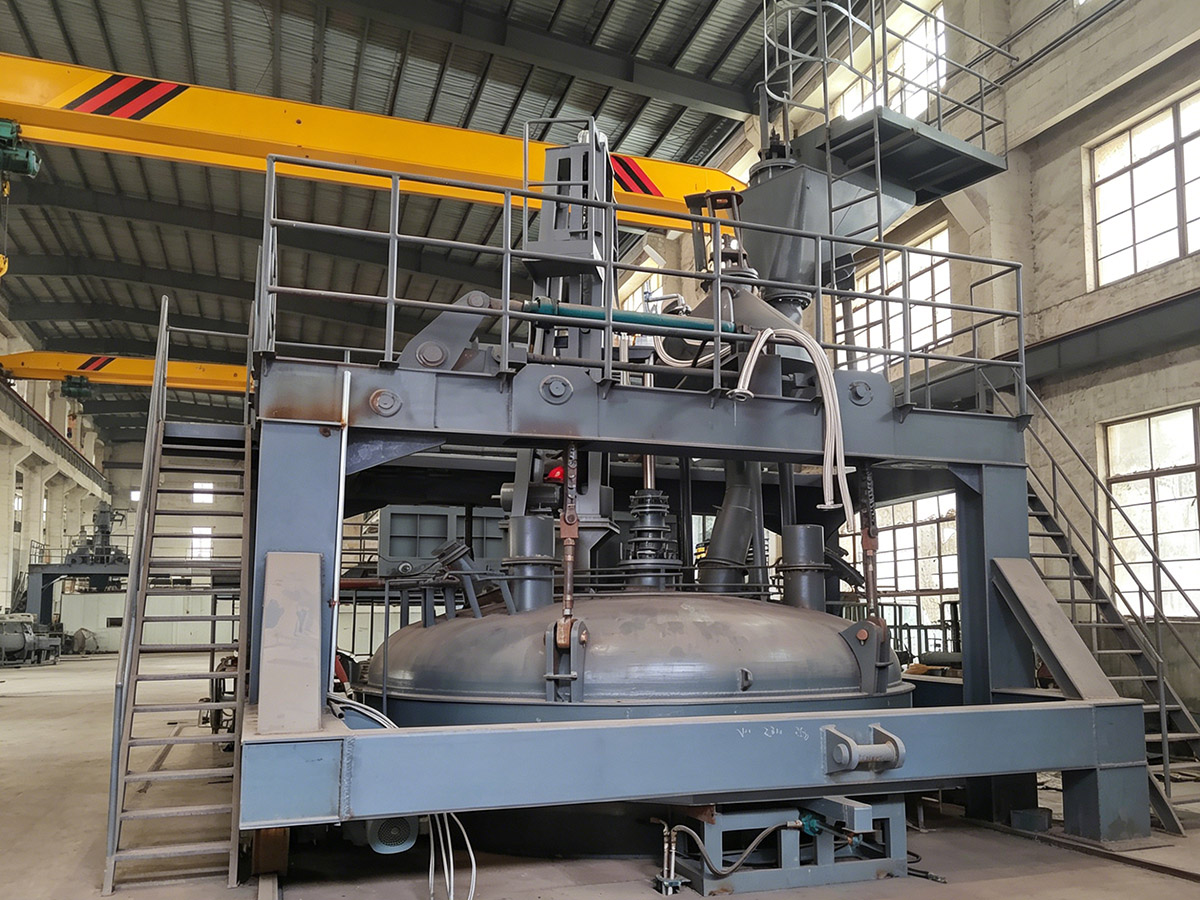
The company profile incorporates the information supplied by Xi'an Starmet for this article. No customer reviews were supplied; no customer quotations or independently verified Starmet project results have been invented.
1. Xi'an Starmet Equipment Co., Ltd. — "Oxygen Burner Vs Oxygen Lance for EAF Scrap Melting." Company-published discussion supporting the distinction between burner and lance selection. The page was identified through search; full-page retrieval was unavailable. [starmetgroup]
2. Tenova — "Electric Arc Furnaces" technical brochure. Describes the KT Injection System and KT burner-postcombustor functions. [tenova]_Brochure_ENG.pdf)
3. Fives — "Non-ferrous Metals." Official overview of combustion applications, controls, and the North American J/L OxyFuel Gas Burner. [fivesgroup]
4. Linde — "Gases and Application Technologies for the Steel Industry." Official descriptions of COJET, OXYGON, and REBOX technologies. [linde-gas]
5. Linde — "Flameless Oxyfuel Technology for Reheating Furnaces." Explains nitrogen reduction, heat transfer, and application-specific REBOX performance claims. [lindeus]
6. Linde — "Linde Acquires Industrial Gas Company in Middle East," September 1, 2025. Supports the discussion of Airtec and GCC gas infrastructure. [linde]
7. Air Liquide — "Air Liquide in the United Arab Emirates." Official information on regional operations, oxygen supply, and engineering and manufacturing entities. [airliquide]
Hot Tags: China, Global, OEM, private label, manufacturers, factory, suppliers, manufacturing company


