Please Choose Your Language

Views: 259 Author: Xi’an Starmet Publish Time: 2026-10-09 Origin: Site


Content Menu
● Electric Furnace Steelmaking: How the Process Works
>> The Main Stages of an EAF Steelmaking Route
>> EAF, Induction Furnace, and Submerged Arc Furnace: Know the Difference
● Start Electric Furnace Steelmaking Plant Design with the Product
>> Build a Practical Design Basis
● Scrap and DRI Selection: The Quality–Cost Trade-Off
>> Why Residual Elements Need Early Attention
>> Compare Materials on Cost per Tonne of Acceptable Steel
● Integrating the EAF, Ladle Furnace, and Vacuum Treatment
>> Match Treatment Capacity to the Production Schedule
● How to Evaluate Electric Furnace Steelmaking Energy Consumption
>> Establish a Consistent Performance Boundary
>> Use Operating Data to Find the Constraint
● Electric Furnace Steelmaking Emissions: Look Beyond the Furnace
>> Ask for Comparable Environmental Information
● A Practical Upgrade Roadmap for Existing EAF Plants
>> Step 1: Establish the Baseline
>> Step 2: Identify the Actual Bottleneck
>> Step 3: Evaluate Interfaces and Shutdown Requirements
>> Step 4: Verify Results After Commissioning
● Choosing an Electric Furnace Steelmaking Equipment Supplier
>> Questions to Resolve Before Contract Award
>> Define Acceptance Criteria Before Ordering
● Discuss Your Steelmaking Project with Xi'an Starmet
● Electric Furnace Steelmaking FAQs
>> 1. What is electric furnace steelmaking?
>> 2. Can an electric arc furnace use both scrap and DRI?
>> 3. Does every EAF plant need vacuum treatment?
>> 4. Why can a larger EAF fail to increase annual output?
>> 5. What should buyers provide for an initial equipment proposal?
>> 6. Can an existing electric furnace steelmaking plant be upgraded?
At Xi'an Starmet Equipment Co., Ltd., we approach electric furnace steelmaking as an integrated engineering challenge—not simply a furnace purchase. We provide engineering design, equipment supply, manufacturing coordination, project delivery, and spare parts services for global steel, ferroalloy, and non-ferrous metal producers. Our solutions cover electric arc furnaces, submerged arc furnaces, refining furnaces, vacuum treatment systems, continuous casting equipment, and related metallurgical components.
For steelmakers, the objective is clear: produce the required steel grades consistently, at a competitive conversion cost, with reliable equipment and manageable environmental impacts. Achieving that objective requires the furnace, raw materials, utilities, secondary metallurgy, and casting operations to work together.
This guide explains how electric furnace steelmaking works, where performance problems arise, and what buyers should evaluate before investing in a new plant or equipment upgrade.
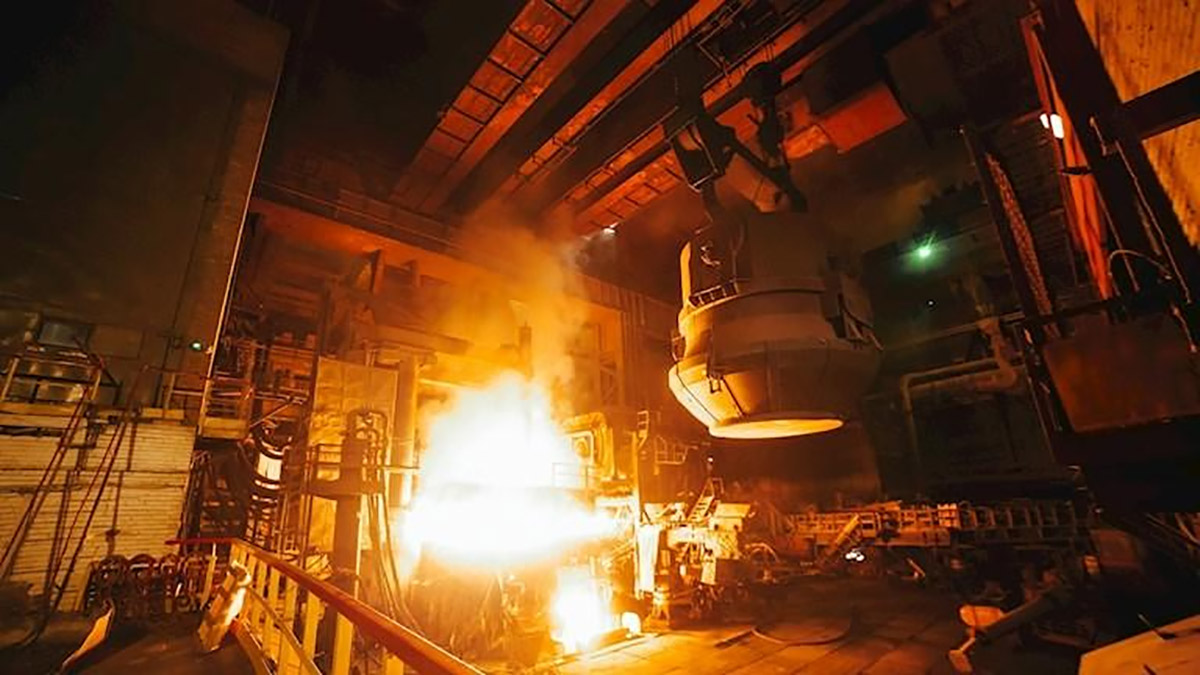
Electric furnace steelmaking uses electrical energy to melt metallic feedstock and produce liquid steel. Electric arc furnaces, or EAFs, generate heat through arcs between electrodes and the metallic charge or molten bath.
EAFs can process steel scrap and ore-based metallic materials such as direct reduced iron, known as DRI, and hot-briquetted iron, or HBI. Some configurations also accommodate hot metal.
The best charge mix depends on product requirements, local material availability, energy costs, and furnace design.
A typical production route includes:
1. Raw material inspection, preparation, and charging.
2. Melting through electrical energy and, where designed, chemical energy inputs.
3. Refining to adjust bath chemistry and remove selected impurities.
4. Tapping into a ladle.
5. Secondary metallurgy for temperature, chemistry, and cleanliness control.
6. Continuous casting into billets, blooms, or slabs.
These stages are connected. Faster melting offers limited value if ladle treatment or casting cannot accommodate the additional output.
*[Suggested visual: A process diagram showing raw materials → EAF → ladle furnace → optional vacuum treatment → continuous casting.]*
"Electric furnace" describes several technologies, not one interchangeable machine.
An EAF uses electric arcs for melting and refining. An induction furnace heats metal through electromagnetic induction. Their process capabilities and appropriate applications differ.
Submerged arc furnaces typically serve ferroalloy and other reduction processes. Although Xi'an Starmet's equipment portfolio includes these furnaces, they should not be presented as substitutes for an EAF steelmaking route.
Equipment selection should begin with the intended metallurgical process—not the broad equipment name.
The first engineering question should be: "What steel must this plant reliably produce?"
A production target expressed only in tonnes per year is insufficient. The project team also needs the grade mix, acceptable residual elements, required cleanliness, casting format, and delivery specifications.
These requirements influence raw material selection, refining capacity, vacuum treatment needs, and process scheduling.
Before requesting an electric arc furnace quotation, define:
| Design input | Why it matters |
|---|---|
| Steel grades and quality specifications | Establish chemistry, cleanliness, and treatment requirements |
| Annual production and operating schedule | Determine realistic capacity and availability needs |
| Scrap, DRI, and HBI availability | Influence charge preparation, feeding, and operating cost |
| Electricity supply and tariff structure | Affect transformer selection, production scheduling, and economics |
| Existing casting equipment | Set downstream throughput and timing constraints |
| Site utilities and environmental requirements | Define cooling, gas supply, extraction, and treatment systems |
A clearly documented design basis reduces ambiguity between the buyer, equipment supplier, manufacturing partners, and installation team.
For Xi'an Starmet, it also provides the foundation for a customized engineering solution rather than a generic equipment package.
Raw materials are not merely furnace inputs. They influence chemistry, yield, energy demand, slag generation, and production stability.
Scrap purchasing decisions should therefore consider more than price per delivered tonne.
Important variables include bulk density, dimensions, contamination, moisture, metallic yield, and residual element content.
Certain residual elements, particularly copper and tin, are difficult to remove through conventional steelmaking practice.
Secondary metallurgy cannot be treated as a universal remedy for unsuitable scrap.
For demanding grades, the practical strategy may involve better scrap segregation, tighter supplier specifications, and dilution with suitable low-residual metallics.
DRI and HBI can support charge chemistry control, but their value depends on characteristics such as metallization, carbon content, gangue, temperature, and handling condition.
A useful purchasing comparison includes:
- Delivered material cost.
- Expected metallic yield.
- Additional electricity and consumable demand.
- Slag handling implications.
- Effects on grade compliance and rejection risk.
- Storage, handling, and feeding requirements.
A cheaper charge can become more expensive after melting losses, treatment requirements, and quality penalties are included.
The purchasing team and melt shop should evaluate feedstock together.
An efficient EAF plant needs a balanced secondary metallurgy system.
The EAF handles melting and primary refining. A ladle furnace supports temperature adjustment, alloying, and suitable refining operations.
Vacuum treatment may be necessary for grades requiring tighter dissolved-gas control or particular metallurgical outcomes. Depending on the product portfolio, options may include vacuum degassing or RH treatment.
Not every steel grade needs the same treatment route.
When secondary metallurgy is undersized, the plant may experience:
- EAF waiting time.
- Excessive holding and reheating.
- Unstable ladle temperatures.
- Interrupted casting sequences.
- Reduced effective production capacity.
The engineering assessment should compare treatment duration, ladle availability, crane movements, transfer times, and caster demand.
Equipment capacity on a specification sheet does not automatically equal achievable plant output.
*[Suggested visual: A timing chart comparing EAF tapping, ladle treatment, and continuous casting for several consecutive heats.]*
Energy performance matters, but isolated headline figures can mislead buyers.
Published EAF performance claims may reflect specific charge materials, scrap-preheating arrangements, furnace technologies, operating conditions, and measurement boundaries.
They are not universal guarantees.
An electricity figure measured per tonne of tapped liquid steel cannot be compared directly with one measured per tonne of good cast product without adjustment.
For meaningful comparisons, record:
- The denominator: charged metal, tapped steel, or acceptable cast product.
- Whether auxiliary equipment electricity is included.
- The charge mix and incoming material temperature.
- Oxygen, fuel, and carbon consumption.
- Steel grade and tapping temperature.
- Yield and operating availability.
A comprehensive evaluation also considers electrode consumption, refractory wear, maintenance effort, and product quality.
Reducing electricity consumption is valuable only if the overall operating result improves.
When performance deteriorates, review trends across multiple comparable heats.
For example, longer power-on time may relate to charge characteristics, electrical settings, or operating practice. Longer power-off time may point toward charging delays, maintenance interruptions, or downstream congestion.
Separating these categories prevents a process problem from being mistaken for a furnace hardware problem.
Electric furnace steelmaking can offer substantial emissions advantages, particularly when recycling scrap with low-carbon electricity.
However, an electrically powered furnace is not automatically a low-carbon steelmaking system.
The result depends on electricity generation, feedstock production, fuel use, and the assessment boundary.
DRI-based routes require particular attention because emissions associated with iron production can materially affect the overall result.
Before comparing suppliers or production routes, clarify:
1. Which emission scopes are included?
2. How is purchased electricity calculated?
3. Are upstream feedstock emissions included?
4. What production and yield assumptions are used?
5. Does the assessment include auxiliary plant operations?
Dust extraction and workplace emission control also require dedicated engineering. Climate performance does not replace local air-quality compliance.
*[Suggested visual: A boundary diagram distinguishing furnace emissions, purchased electricity, and upstream feedstock production.]*
A complete furnace replacement is not always the most appropriate starting point.
For existing facilities, the better sequence is to identify the production constraint, establish its cause, and compare targeted improvement options.
Potential upgrade areas include electrical systems, electrode regulation, material handling, cooling systems, extraction, automation, secondary metallurgy, and casting coordination.
Collect representative heat records, maintenance history, consumable usage, downtime reasons, and quality results.
Separate performance by grade and charge mix where possible.
Determine whether lost output originates in melting, charging, tapping, ladle treatment, equipment availability, or casting.
Avoid sizing an upgrade around the most visible symptom.
Check foundations, clearances, electrical connections, utilities, control systems, and existing operating procedures.
A promising modification may be impractical without sufficient installation access or shutdown time.
Compare performance under equivalent conditions.
Document changes in output, energy use, quality, availability, and maintenance demand rather than relying on a single favorable heat.
Xi'an Starmet can support customized equipment upgrades and technical coordination based on the customer's process and site requirements.
A supplier assessment should examine more than furnace capacity and purchase price.
Buyers need clarity about engineering responsibilities, manufacturing coordination, equipment interfaces, documentation, delivery scope, and spare parts support.
Ask prospective suppliers:
- What inputs underpin the proposed design?
- Which equipment and services are included or excluded?
- Who is responsible for system interfaces?
- What utilities and infrastructure must the buyer provide?
- Which drawings, manuals, and inspection records will be delivered?
- How will acceptance performance be measured?
- What spare parts information and technical support are available?
Performance acceptance should specify the steel grade, charge mix, utility conditions, measurement method, test duration, and acceptable exclusions.
Production guarantees without agreed operating conditions can create disputes.
A clear acceptance plan also makes commissioning more useful: it tests whether the installed system meets the intended production requirements.
Xi'an Starmet Equipment Co., Ltd. supports metallurgical projects through engineering design, equipment supply, manufacturing coordination, project delivery, and spare parts services.
For a new electric furnace steelmaking plant or an existing facility upgrade, share your target grades, production capacity, available feedstock, site utilities, and current operating constraints.
These inputs help define an appropriate equipment scope and identify the technical questions that should be resolved before procurement.
Contact Xi'an Starmet to discuss a customized furnace, refining, vacuum treatment, casting, or spare parts solution aligned with your production needs.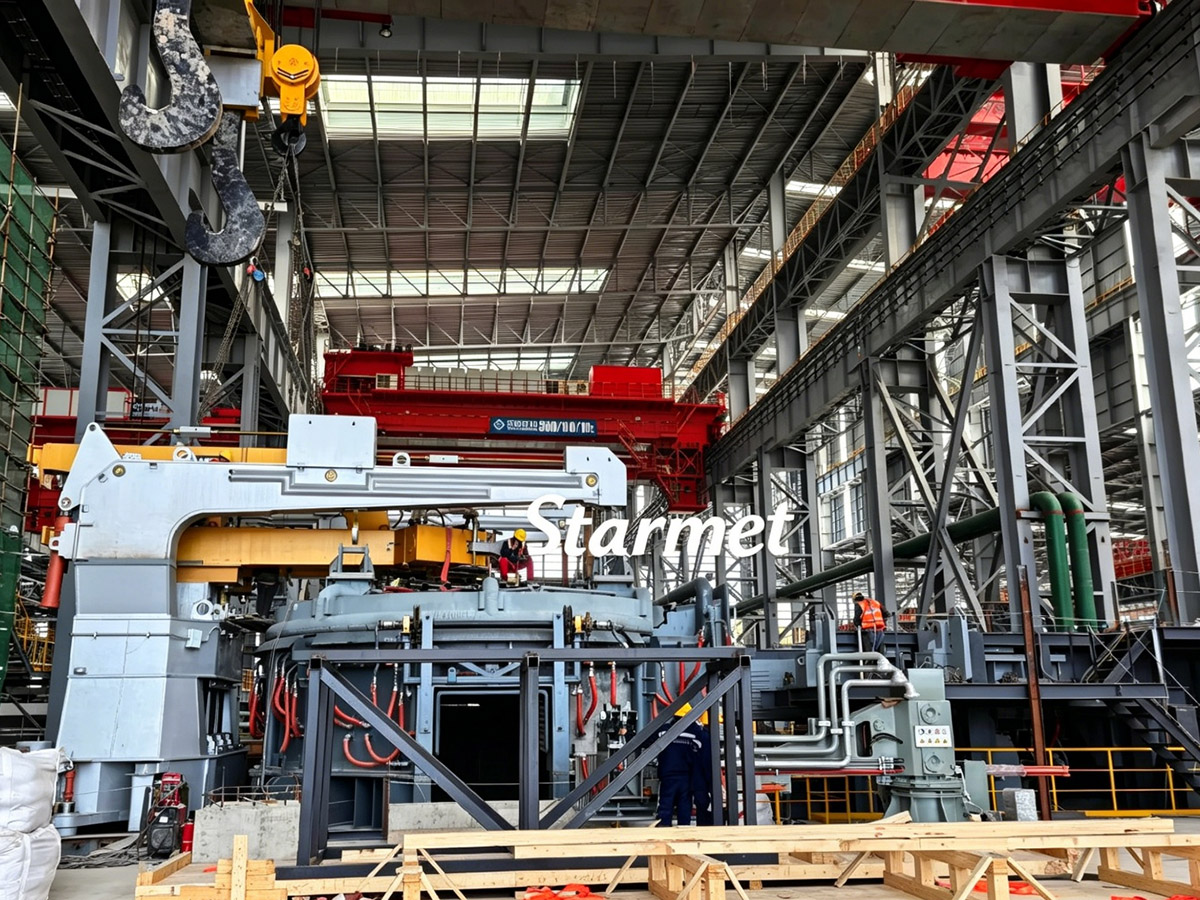
It is steel production using electrically powered melting equipment. In an EAF route, electric arcs melt metallic feedstock, followed by refining, secondary metallurgy where required, and casting.
Yes. Suitable EAF configurations can process scrap and DRI, including mixed charges. The appropriate proportions depend on furnace design, feedstock characteristics, grade requirements, and operating economics.
No. Vacuum treatment requirements depend on the steel grades and product specifications. The treatment route should be selected from metallurgical requirements rather than included automatically.
The production constraint may lie elsewhere. Insufficient ladle treatment capacity, casting limitations, utility restrictions, or equipment downtime can prevent additional furnace capacity from increasing saleable output.
Provide target grades, production volume, charge materials, casting requirements, available utilities, site information, and existing equipment details. These inputs support a realistic preliminary engineering assessment.
Yes, subject to technical assessment. Targeted modifications may address electrical performance, feeding, automation, extraction, reliability, or downstream coordination. The upgrade should solve a documented constraint.
Hot Tags: China, Global, OEM, private label, manufacturers, factory, suppliers, manufacturing company


